Roofing Tips & Guides
Expert Roofing Advice for Charlotte Homeowners
Learn from Charlotte's trusted roofing experts. Tips on maintenance, repair, replacement, and protecting your home from the elements.
Learn from Charlotte's trusted roofing experts. Tips on maintenance, repair, replacement, and protecting your home from the elements.

North Carolina's weather can be downright unpredictable. One day you're enjoying 75-degree sunshine, the next you're dealing with a surprise storm that dumps three inches of rain in an hour. And that's just spring.
As someone who's been installing and repairing gutters across Charlotte and Lake Norman for years, I've seen what happens when homeowners choose the wrong material for our climate. The results aren't pretty – and they're definitely not cheap to fix.
Your gutters are your home's first line of defense against water damage. But here in the Tar Heel State, they face unique challenges that gutters in Arizona or Minnesota simply don't encounter.
North Carolina sits in what meteorologists call a "transition zone." We get the worst of several weather patterns converging right over our heads.
Our summers bring intense heat and humidity that can warp certain materials. Fall delivers tons of leaves that clog systems. Winter throws freezing temperatures that cause expansion and contraction. And spring? That's tornado and severe thunderstorm season.
But the real challenge is our rainfall. Charlotte gets about 43 inches of rain per year – that's 10 inches more than the national average. The Lake Norman area sees similar numbers, with some years pushing closer to 50 inches.
This isn't gentle, steady rain either. We get what I call "Carolina downpours" – intense storms that overwhelm gutters in minutes. I've measured rainfall rates of over 2 inches per hour during summer thunderstorms.
Then there's our coastal influence. Even inland areas like Huntersville and Cornelius deal with salt-laden air carried by prevailing winds. This creates corrosion issues that dry climates never face.
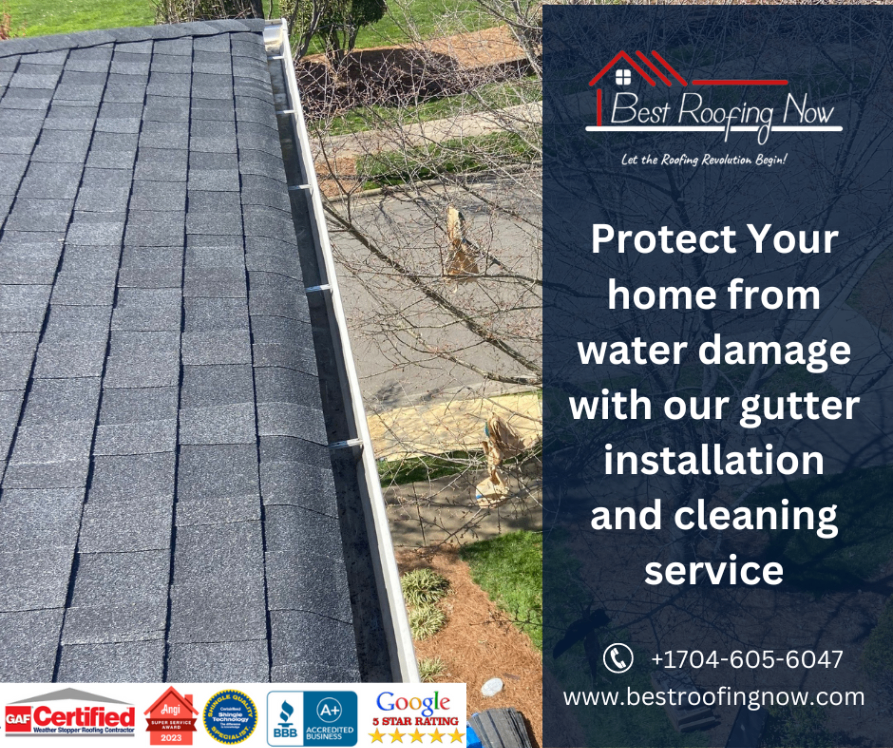
About 70% of gutters we install are aluminum. There's a reason for this popularity.
Aluminum naturally resists rust, which is crucial in our humid climate. It's lightweight, so your fascia boards don't bear excessive weight during ice storms. And it's relatively affordable – important when you're replacing 200 linear feet of gutters.
Quality aluminum gutters last 25-30 years here in North Carolina. They handle our temperature swings well, expanding and contracting without cracking.
But aluminum has weaknesses. Hail storms can dent it badly. I've seen gutters that looked like golf balls after a severe storm rolled through Davidson. Large tree branches will bend aluminum gutters, sometimes beyond repair.
Aluminum also requires proper installation. The seams must be sealed correctly, or our heavy rains will find every weak spot.
Best for: Budget-conscious homeowners who want reliable performance and don't mind occasional repairs.
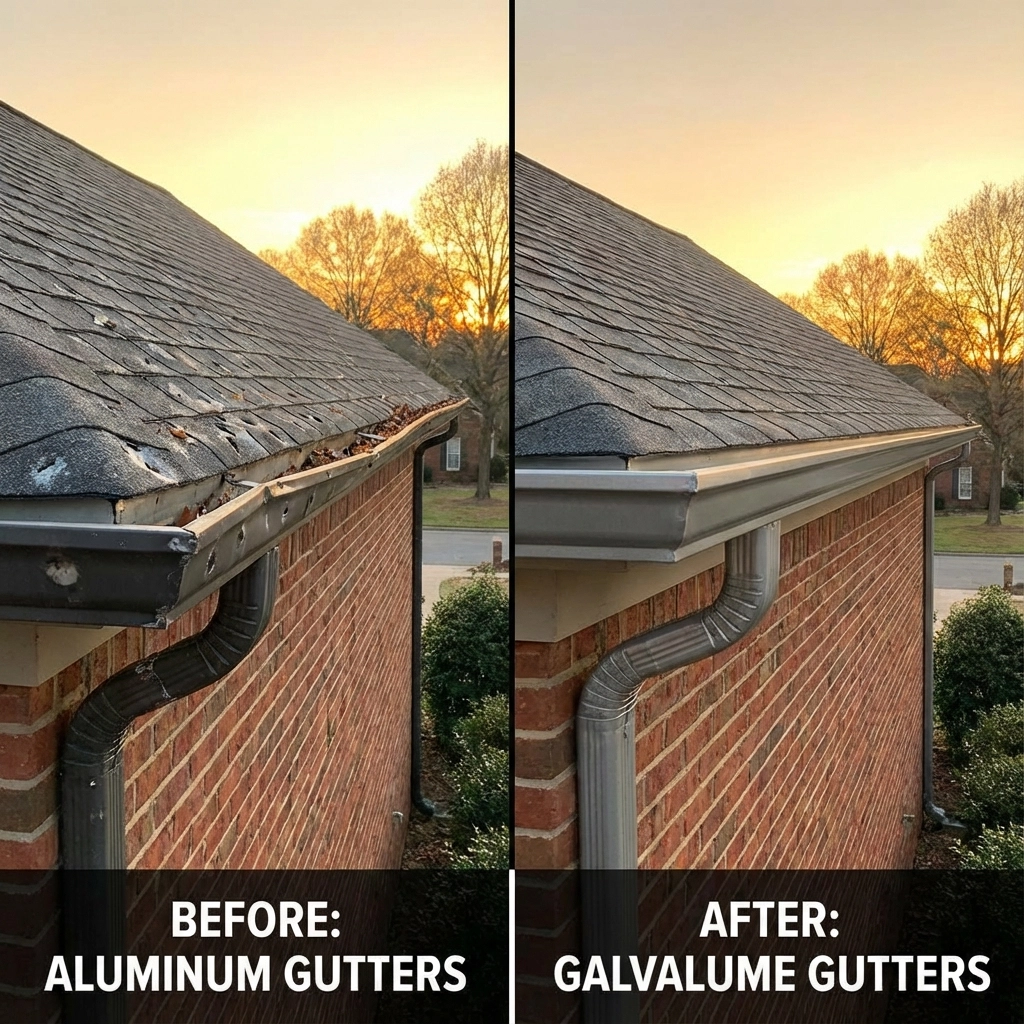
Galvalume might be the best-kept secret in North Carolina gutters. It's a steel core coated with 55% aluminum and 45% zinc.
This combination gives you steel's strength with aluminum's corrosion resistance. The result? Gutters that can last 50-70 years in our climate.
Galvalume handles our weather extremes exceptionally well. The steel core won't dent like pure aluminum. The coating prevents rust better than galvanized steel. And it's flexible enough to handle temperature changes without cracking.
I've seen 20-year-old galvalume gutters that still look new. That's impressive considering what North Carolina weather throws at them.
The downside? Installation complexity. Galvalume requires professional installation to properly seal joints. DIY installation often leads to leaks within the first year.
Best for: Homeowners wanting maximum durability and willing to invest in professional installation.
Copper gutters are the luxury car of gutter systems. They develop a beautiful patina over time and can last 60+ years.
Copper handles our coastal humidity beautifully. It naturally resists corrosion and never rusts. Heavy rains don't faze it – copper gutters can handle our most intense storms.
The aesthetic appeal is undeniable. Historic homes in Charlotte's older neighborhoods often feature copper gutters that enhance the property's character.
But copper comes with a premium price tag. Installation costs 3-4 times more than aluminum. And copper requires skilled installation – mistakes are expensive to fix.
Best for: Historic homes, luxury properties, or homeowners who view gutters as a long-term investment in curb appeal.
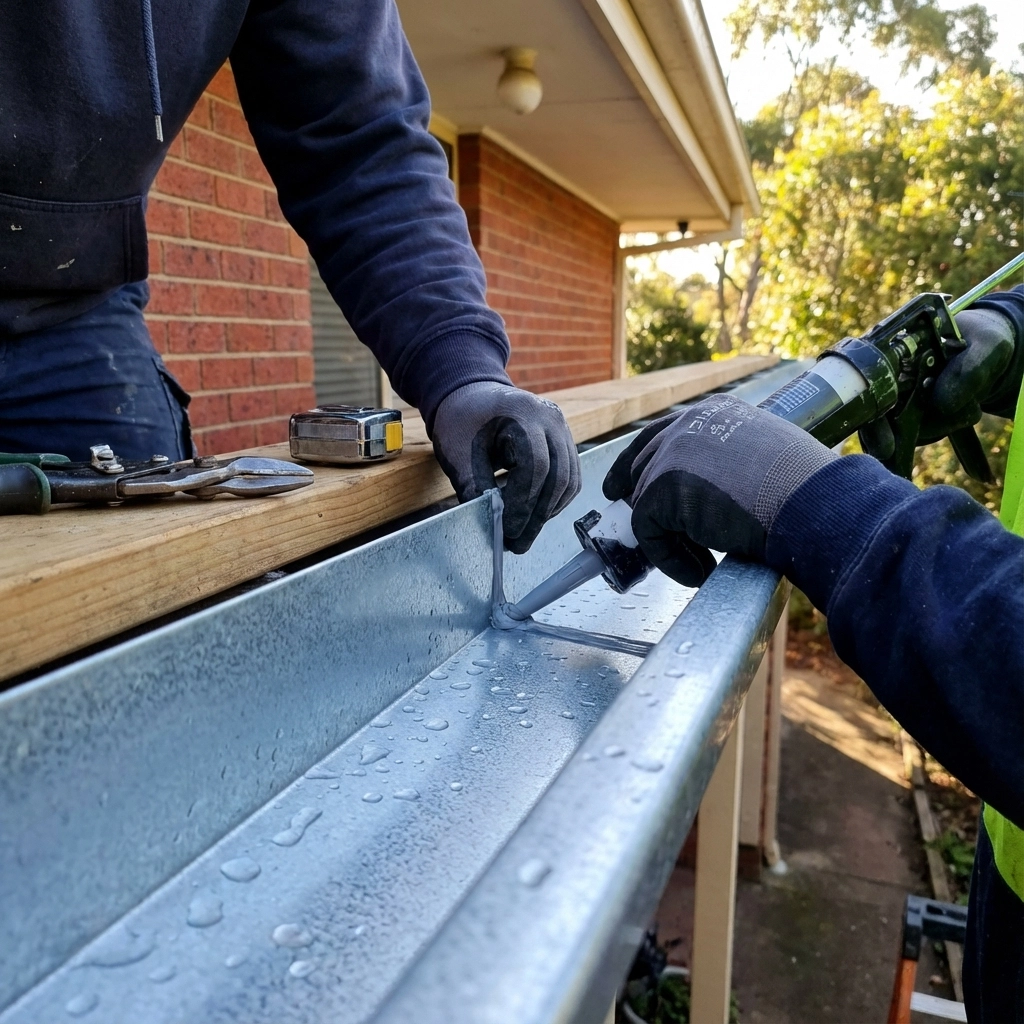
Steel gutters, including galvanized and stainless steel options, offer maximum durability. They're essentially bulletproof against hail, falling branches, and impact damage.
Galvanized steel has been used in construction for decades. It handles our weather well and costs less than stainless steel. However, the galvanized coating eventually wears off, leading to rust issues in 15-20 years.
Stainless steel is the ultimate choice for coastal areas. It never rusts, handles salt air perfectly, and lasts indefinitely. But it's expensive and requires skilled installation.
Best for: Areas prone to severe weather or coastal properties needing maximum corrosion resistance.
Homes within 50 miles of the coast face additional challenges. Salt air accelerates corrosion on all metals. Humidity stays high year-round. And hurricane season brings extreme wind and rain.
For coastal properties, I recommend stainless steel or high-grade copper. These materials handle salt exposure without degrading. Aluminum can work, but it needs more frequent maintenance and replacement.
Inland areas deal with temperature extremes and heavy rainfall but less salt exposure. This opens up more material options.
Galvalume performs exceptionally well inland. Aluminum works fine with proper maintenance. Even galvanized steel can be viable for budget-conscious homeowners.
The key inland is handling temperature swings. Materials must expand and contract without failing at the joints.
Standard 5-inch gutters work for most homes, but North Carolina's heavy rains often require 6-inch gutters. The larger size handles 40% more water – crucial during our intense summer storms.
Downspout sizing matters too. One downspout should drain no more than 600-800 square feet of roof area in our climate. Many homes need additional downspouts to handle water volume properly.
With our abundant tree cover, gutter guards can be valuable. They reduce maintenance and prevent clogs during leaf season.
But not all guards work well here. Solid covers can create ice dams during rare freezing events. Mesh guards work better in our climate, allowing water through while blocking debris.
Aluminum gutters can be DIY-friendly for handy homeowners. The materials are forgiving, and mistakes aren't catastrophic.
But galvalume, copper, and steel require professional installation. These materials must be cut, sealed, and hung precisely. Poor installation leads to leaks, premature failure, and voided warranties.
Here's what you can expect to pay per linear foot installed in the Charlotte area:
These prices include professional installation with proper hangers, sealants, and downspouts.
When calculating true cost, consider lifespan:
Galvalume offers the best long-term value when you factor in durability and performance.
Clean gutters twice yearly. Inspect for dents or loose joints after storms. Reseal joints every 5-7 years. Touch up paint as needed.
Annual inspection and cleaning. Check for coating damage. Professional maintenance every 10-15 years to ensure optimal performance.
Minimal maintenance required. Clean annually. Allow patina development – don't try to maintain the original copper color.
Galvanized: Watch for rust spots and treat immediately. Stainless: Clean annually, inspect joints.
Aluminum gutters offer the best entry-level performance. Choose heavier gauge aluminum (0.032" minimum) for better durability. Expect 25-30 years of service with proper maintenance.
Galvalume gutters provide the sweet spot between cost and performance. They'll likely outlast your mortgage while handling everything North Carolina weather throws at them.
Copper gutters enhance property value and provide unmatched longevity. The higher upfront cost pays dividends in performance and aesthetic appeal.
Stainless steel or copper are your best options. The salt air will destroy cheaper materials within 10-15 years. Invest in quality upfront to avoid frequent replacements.
If you're in a location that regularly sees hail or falling trees (looking at you, areas near Lake Norman's wooded neighborhoods), consider galvalume or steel. The extra strength prevents costly damage repairs.

Thin gauge aluminum (less than 0.027") won't hold up to our climate. It dents easily and develops leaks quickly.
Vinyl might work in mild climates, but North Carolina's temperature swings cause cracking and brittleness. Avoid vinyl for long-term performance.
Even the best materials fail with poor installation. Ensure your contractor uses proper hangers spaced correctly, seals all joints, and slopes gutters for proper drainage.
Be skeptical of contractors claiming any gutter will last "forever" or never need maintenance. Even copper gutters require some upkeep.
Your gutter material choice depends on your priorities, budget, and location. But here's my honest recommendation after years of working in this climate:
For most Charlotte and Lake Norman area homes, galvalume gutters offer the best combination of performance, durability, and value. They handle our weather extremes, last for decades, and don't break the bank.
If budget is tight, quality aluminum works fine with proper installation and maintenance. You'll likely need replacement in 25-30 years, but the upfront savings can be significant.
For coastal areas or luxury homes, copper or stainless steel justify the extra cost through superior longevity and performance.
Every home is different. Your roof size, tree coverage, architectural style, and budget all influence the best choice.
The key is working with someone who understands North Carolina's unique climate challenges and has experience with all material types.
Don't trust your home's protection to guesswork. A proper evaluation considers your specific situation, local weather patterns, and long-term goals.
Ready to upgrade your gutters with the right material for North Carolina weather? We'll evaluate your home, explain your options clearly, and install a system that protects your investment for decades. Call Best Roofing Now at (704) XXX-XXXX for a free consultation and material recommendation tailored to your specific home and budget.
Best Roofing Now
Charlotte's trusted roofing experts since 2019
Based on this article, you may be interested in these services.
We proudly serve these Charlotte-area communities with professional roofing services.
View All Service Areas →Get a free roof inspection and honest assessment from Charlotte's most trusted roofing company.