Roofing Tips & Guides
Expert Roofing Advice for Charlotte Homeowners
Learn from Charlotte's trusted roofing experts. Tips on maintenance, repair, replacement, and protecting your home from the elements.
Learn from Charlotte's trusted roofing experts. Tips on maintenance, repair, replacement, and protecting your home from the elements.

Here's the truth about commercial flat roofing in 2025: while property managers focus on immediate costs, the real game-changers are happening behind the scenes. Advanced coating technologies, smart monitoring systems, and energy-efficient solutions are transforming how we protect commercial buildings. But many property owners never hear about these innovations.
Why? Sometimes it's easier to stick with "the way we've always done it." Other times, contractors push expensive full replacements when smart alternatives exist. Today, we're pulling back the curtain on flat roof technology that could save you thousands while delivering better performance.
Most property managers think flat roof problems mean one thing: complete replacement. That's expensive thinking that ignores the biggest shift in commercial roofing over the past five years.
Roof coatings have become the dominant solution for extending flat roof life without the massive disruption of tear-offs. We're talking about liquid-applied systems that create seamless, waterproof membranes over existing roofs. Think of it as giving your roof a protective skin that can double its lifespan.
Here's what makes this revolutionary: you avoid the astronomical costs of disposal, labor, and business interruption that come with full replacements. A coating project typically costs 60-70% less than replacement while delivering comparable protection.
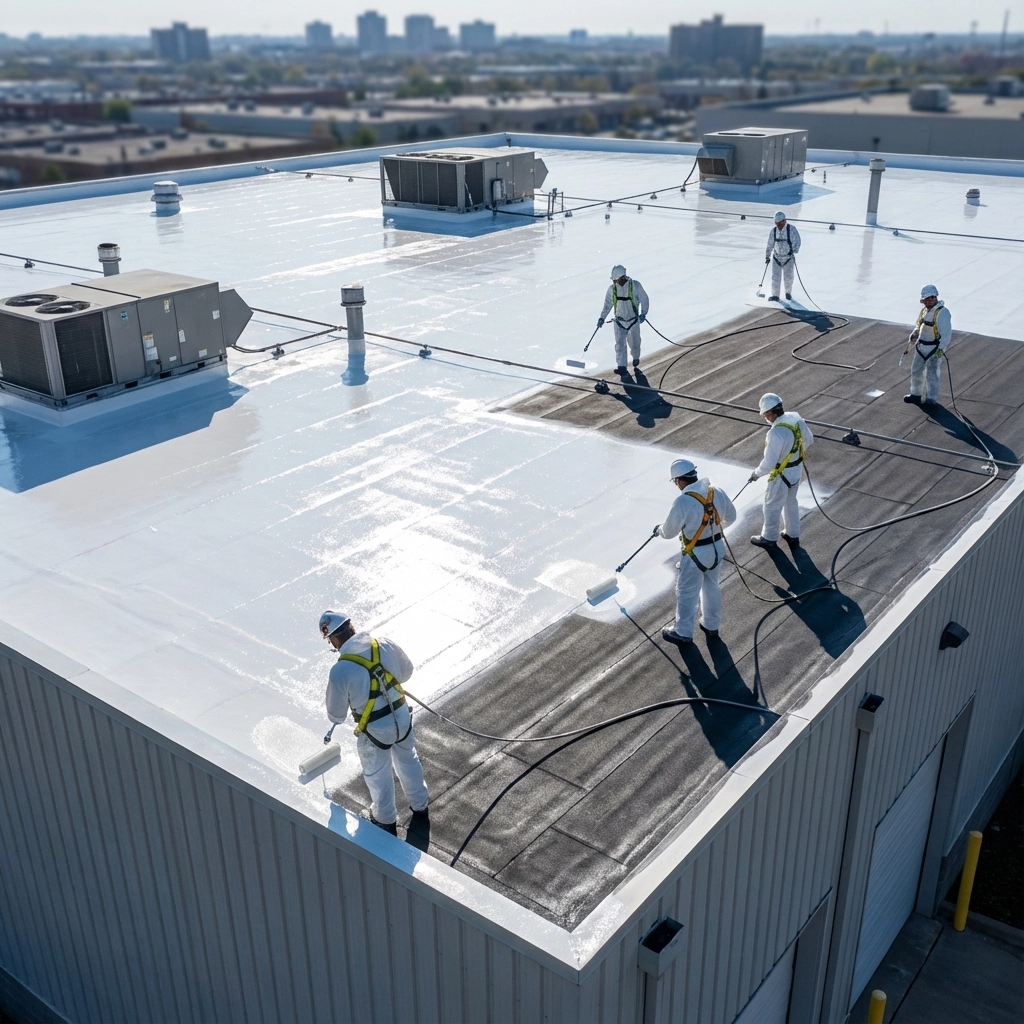
But not all coatings are created equal. The secret lies in understanding which coating matches your specific roof type, climate conditions, and performance goals. Acrylic coatings work well for moderate climates but struggle with ponding water. Silicone coatings excel in wet conditions but cost more upfront. Urethane coatings offer superior durability but require specific application conditions.
"The coating industry has matured to the point where we can confidently recommend coating systems that will outperform many new roof installations," says Thomas Taylor, Technical Director of the National Roofing Contractors Association. "The key is proper substrate preparation and selecting the right coating chemistry for the specific application."
What many contractors won't tell you: coating warranties are now renewable. Apply a maintenance coat every 10-15 years, and you can extend your warranty indefinitely. Compare that to traditional roofing systems that require complete replacement every 15-20 years.
While you're focused on keeping water out, smart building owners are using their roofs to slash energy bills. Cool roof technology isn't new, but the latest innovations deliver results that would surprise most property managers.
Reflective coatings can reduce your building's heat gain by 30-50%. That translates to real money in reduced air conditioning costs, especially during Charlotte's brutal summer months. We've seen commercial buildings cut cooling costs by 20-30% just by switching to high-reflectance roof coatings.
The secret ingredient? Solar Reflectance Index (SRI) ratings above 78. These coatings reflect sunlight instead of absorbing it, keeping your roof surface up to 60 degrees cooler than traditional dark roofs. Lower roof temperatures mean less thermal expansion and contraction, which reduces cracking and extends roof life.
Here's where it gets interesting for solar-equipped buildings: reflective coatings actually improve bifacial solar panel performance. The reflected light boosts the panels' underside efficiency, increasing overall energy production by 5-10%.
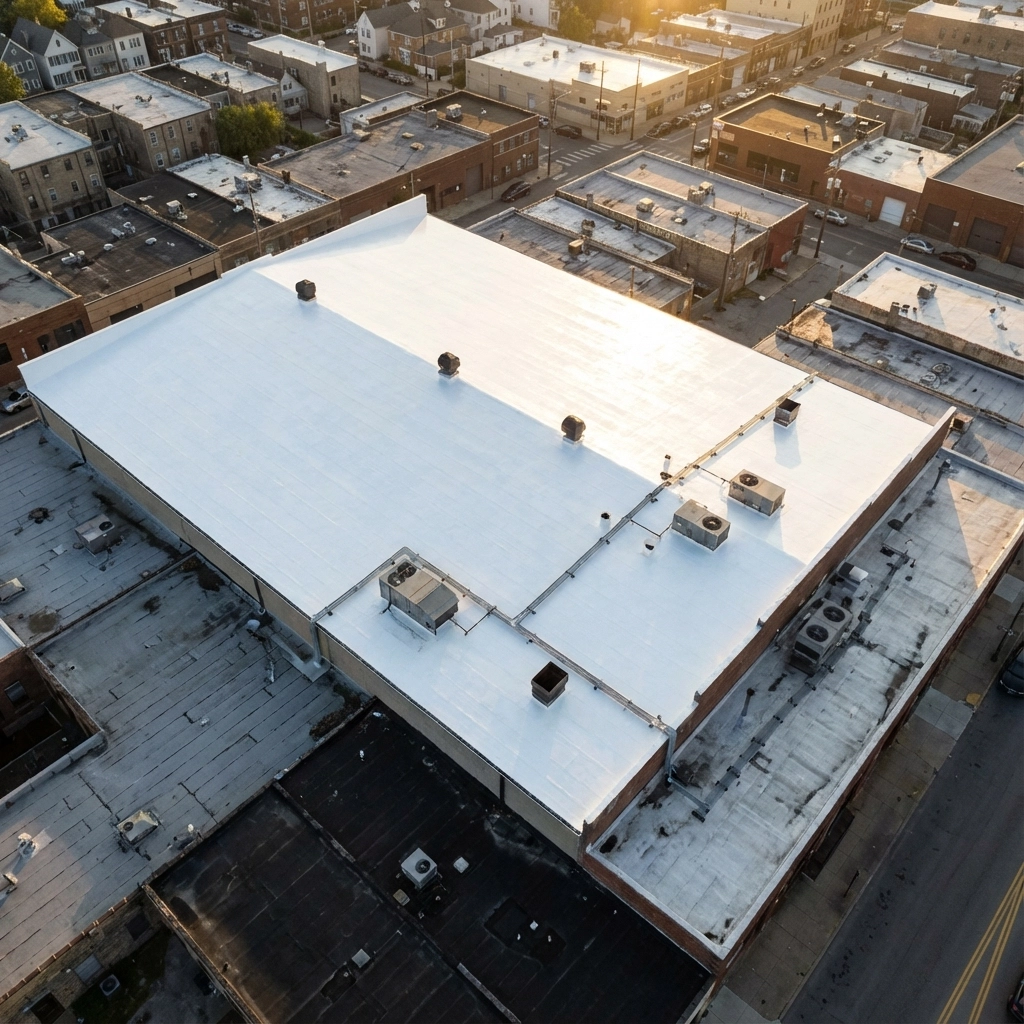
But there's a hidden benefit most property managers miss: reduced urban heat island effect. Cool roofs help moderate the local temperature around your building, creating a more comfortable environment for employees and customers. Some municipalities even offer tax incentives for cool roof installations.
The catch? Not all reflective coatings maintain their reflectance over time. Dirt accumulation and weathering can reduce effectiveness by 20-30% over five years. Look for coatings with dirt-resistant properties and plan for periodic cleaning to maintain peak performance.
The most exciting development in commercial roofing isn't visible from the ground: IoT sensors that monitor roof conditions 24/7. These systems detect moisture infiltration, temperature fluctuations, and structural stress before they become expensive problems.
Smart roofing systems use wireless sensors placed throughout your roof to track:
"Predictive maintenance is transforming commercial roofing from reactive to proactive," explains Dr. Sarah Chen, Building Science Researcher at Clemson University. "We can now identify potential failure points months or even years before they would typically manifest as visible leaks."
The technology sends alerts to your phone when conditions indicate potential problems. Imagine getting a text message that says "Moisture detected in Section 3 – schedule inspection within 48 hours" instead of discovering a leak during the next rainstorm.
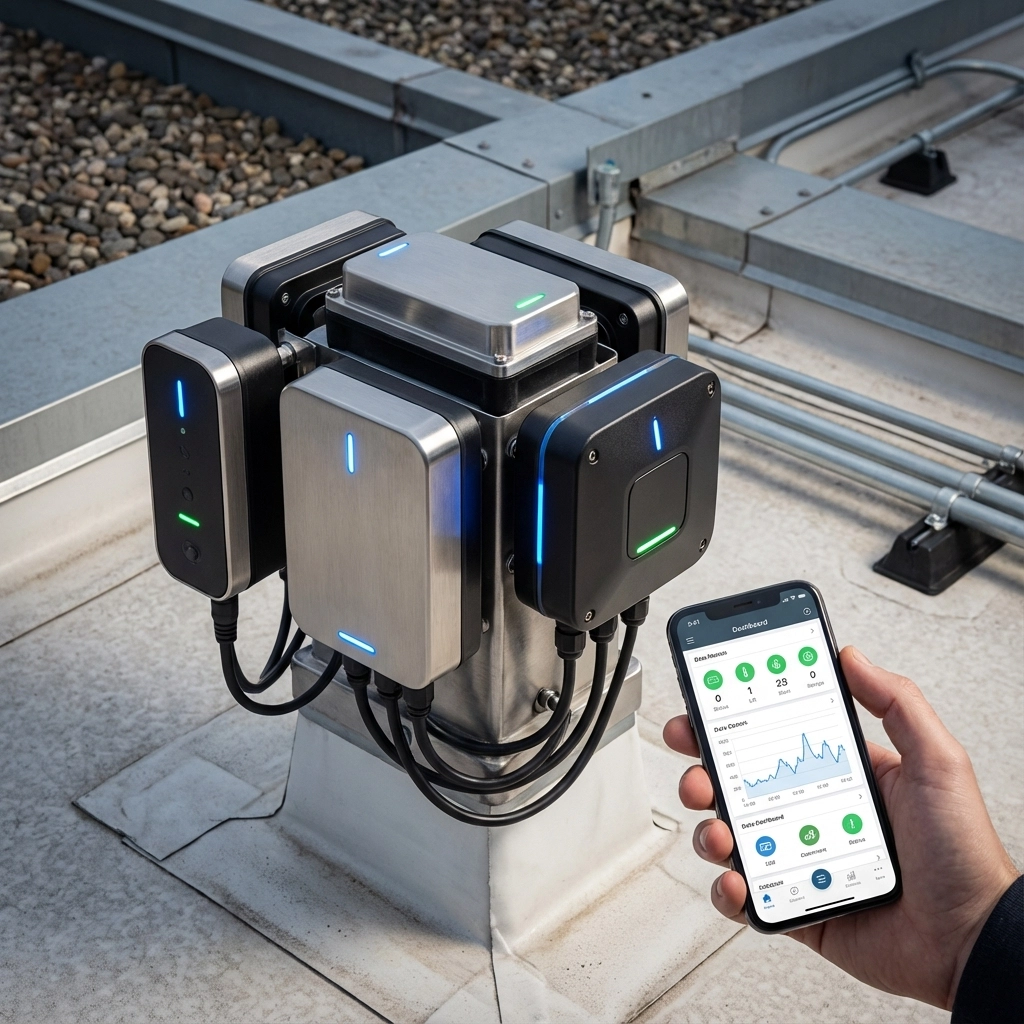
For Charlotte area properties, this technology is particularly valuable. Our region's temperature swings and sudden storm systems create challenging conditions for flat roofs. Smart monitoring helps building owners stay ahead of weather-related damage.
Installation costs range from $2-5 per square foot, but the return on investment is impressive. Early problem detection typically saves 5-10 times the sensor cost in prevented damage and emergency repairs.
While most contractors still push basic EPDM or TPO systems, material science has created hybrid solutions that outperform traditional options.
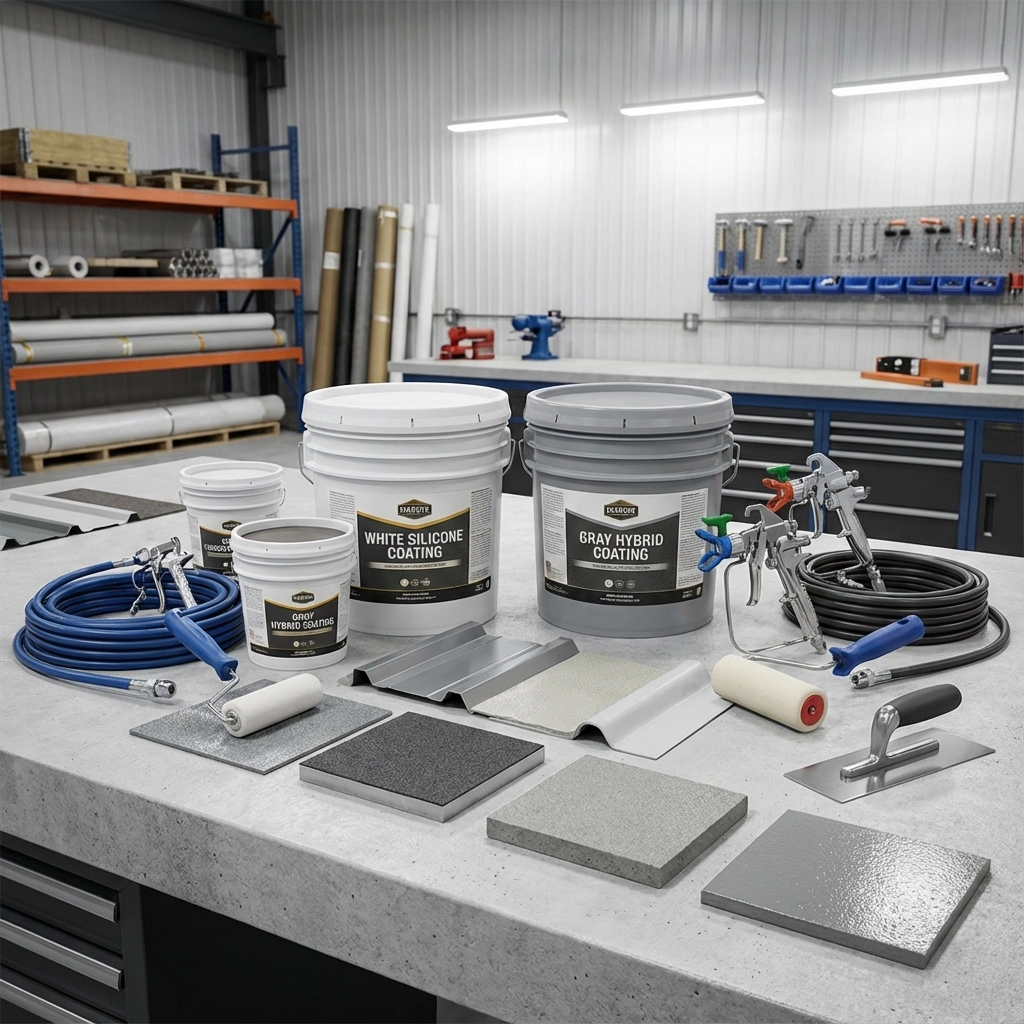
Silicone coatings have emerged as the premium choice for flat roofing applications. They offer superior resistance to ponding water, UV stability that doesn't degrade over time, and flexibility that handles extreme temperature swings without cracking.
Unlike other coating types, silicone systems actually improve with age as they cure. They form a seamless, self-healing membrane that can bridge small cracks and maintain waterproofing integrity for decades. The initial cost runs 15-20% higher than acrylics, but the extended lifespan makes them cost-effective over time.
Hybrid coating systems combine multiple chemistries to maximize performance. These advanced formulations might use urethane base coats for adhesion, silicone top coats for weather resistance, and acrylic primers for specific substrate compatibility. The result is customized protection that addresses your building's specific challenges.
Prefabricated roofing systems are another innovation gaining traction. These factory-manufactured panels arrive with insulation, membrane, and protective layers already integrated. Installation is faster, quality control is superior, and thermal performance is optimized.
Green roofing technology has evolved beyond basic vegetation systems. Modern extensive green roofs use drought-resistant plants, lightweight growing mediums, and integrated irrigation systems. They provide superior insulation, manage stormwater runoff, and can qualify for LEED certification credits.
The secret to coating success isn't just material selection – it's application technology that most contractors haven't adopted yet.
Drone-assisted inspections provide detailed roof condition assessments without the safety risks and costs of manual surveys. High-resolution thermal imaging identifies moisture problems invisible to the naked eye. These inspections create detailed maps showing exactly where repairs are needed before coating application.
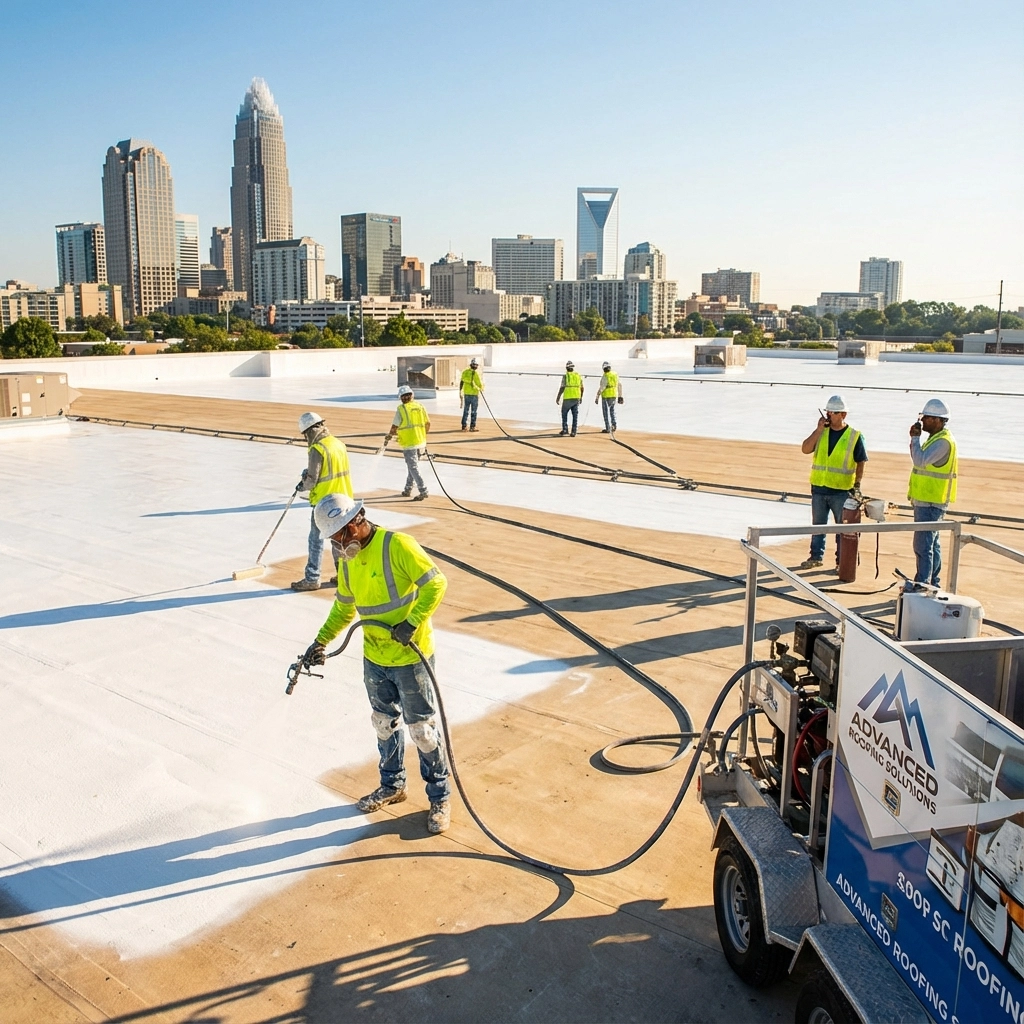
Spray application technology has advanced significantly. Modern equipment provides consistent mil thickness across the entire roof surface, eliminating thin spots that cause premature failure. Some contractors now use GPS-tracked sprayers that ensure complete coverage and proper application rates.
Weather monitoring systems help contractors time applications for optimal curing conditions. Coatings applied during improper temperature or humidity conditions may never achieve full performance. Smart contractors use real-time weather data to schedule applications during ideal conditions.
Surface preparation technology has improved dramatically. Power washing systems now use recycled water and capture waste materials for proper disposal. Shot-blasting equipment removes deteriorated materials without damaging the underlying structure.
The biggest secret in commercial roofing? Timing maintenance cycles to maximize roof life while minimizing disruption.
Most property managers wait for problems before taking action. Smart building owners use preventive strategies that extend roof life by 50-100% while reducing total ownership costs.
Maintenance coating cycles every 10-12 years can extend indefinitely with proper care. Each cycle costs roughly 25% of a full replacement while providing equivalent protection. Over a 30-year period, this strategy typically saves 40-60% compared to traditional replacement cycles.
Energy rebate programs in North Carolina provide substantial incentives for cool roof installations. These programs can offset 15-30% of project costs, making premium solutions cost-competitive with basic options.
Bulk purchasing programs for multiple properties can reduce material costs by 20-30%. If you manage several commercial buildings, coordinating roof maintenance cycles provides significant economies of scale.
Financing options have expanded beyond traditional loans. Energy Service Company (ESCO) agreements allow building owners to implement improvements with no upfront costs, paying for projects through guaranteed energy savings.
Our local climate creates unique challenges that influence flat roof technology choices. Charlotte's hot, humid summers and temperature swings demand specific solutions.
Thermal shock resistance is critical for Charlotte area roofs. Daily temperature variations of 40-50 degrees stress roofing materials beyond their design limits. Flexible coating systems that accommodate thermal movement prevent cracking and maintain waterproofing integrity.
UV exposure intensity in our region degrades many roofing materials faster than northern climates. Look for coatings with UV stabilizers specifically formulated for southeastern conditions. Cheaper alternatives may save money initially but fail prematurely under our intense sun exposure.
Storm resistance matters for flat roofs in Charlotte. High winds can create uplift pressures that test membrane adhesion. Mechanically-attached systems or fully-adhered membranes provide superior wind resistance compared to ballasted systems.
Drainage design is crucial for our region's intense rainfall patterns. Charlotte receives 43+ inches of annual precipitation, often in concentrated storm events. Flat roofs must handle 3-4 inches of rain per hour without experiencing dangerous ponding.
Local building codes are evolving to address climate change impacts. New energy efficiency requirements favor reflective roofing systems, while updated wind load calculations affect membrane attachment requirements.
Not all roofing contractors understand advanced flat roof technologies. Here's how to identify contractors who can deliver modern solutions:
Look for manufacturer certifications in specific coating systems. Certified contractors receive training on proper application techniques and have access to extended warranties. They also understand substrate compatibility issues that cause coating failures.
Ask about diagnostic equipment. Modern contractors use thermal imaging cameras, moisture meters, and core sampling equipment to properly assess existing roof conditions. Contractors who rely on visual inspections alone miss critical problems.
Verify insurance and licensing for commercial work. Flat roof coating application requires different skills and insurance coverage than residential roofing. Make sure your contractor carries appropriate coverage for commercial applications.
Request references from similar projects completed within the past two years. Technology changes rapidly, so recent experience with your specific roof type and coating system is essential.
Evaluate warranty offerings. Contractors confident in their work offer comprehensive warranties covering both materials and labor. Be cautious of contractors who only provide manufacturer material warranties.
At Best Roofing Now, we've invested in advanced diagnostic equipment, manufacturer certifications, and ongoing training to stay current with flat roof technology developments. Our commercial roofing specialists understand local climate challenges and can recommend solutions that maximize your investment.
The commercial roofing landscape has changed dramatically, but many property managers still make decisions based on outdated information. Understanding these technology advances helps you make informed choices that reduce costs while improving performance.
Start with a comprehensive roof assessment using modern diagnostic techniques. Understanding your current roof condition guides material selection and timing decisions. Rushing into replacement without proper evaluation often wastes money on unnecessary work.
Consider total lifecycle costs rather than just initial installation prices. Premium coating systems that cost 20-30% more upfront often deliver 50-100% longer service life, making them the economical choice over time.
Plan maintenance cycles strategically to minimize business disruption while maximizing roof life. Coordinating roof work with other building maintenance activities reduces overall project costs and scheduling conflicts.
Evaluate energy efficiency opportunities that can offset project costs through reduced operating expenses. Cool roof systems that qualify for utility rebates or tax incentives make financial sense beyond just roof protection.
The secret isn't that property managers don't want you to know about these technologies – it's that many aren't aware of the rapid changes happening in commercial roofing. By staying informed about these advances, you can make decisions that protect your property investment while reducing long-term costs.
Ready to explore how modern flat roof technology can benefit your commercial property? Contact our commercial roofing experts at Best Roofing Now for a comprehensive assessment using the latest diagnostic tools. We'll show you exactly what options are available for your specific building and budget. Call us today at (704) 778-ROOF to schedule your technology-enhanced roof evaluation and discover what these innovations can do for your property.
Best Roofing Now
Charlotte's trusted roofing experts since 2019
Based on this article, you may be interested in these services.
We proudly serve these Charlotte-area communities with professional roofing services.
View All Service Areas →Get a free roof inspection and honest assessment from Charlotte's most trusted roofing company.