
Roofing Tips & Guides
Expert Roofing Advice for Charlotte Homeowners
Learn from Charlotte's trusted roofing experts. Tips on maintenance, repair, replacement, and protecting your home from the elements.
Learn from Charlotte's trusted roofing experts. Tips on maintenance, repair, replacement, and protecting your home from the elements.

Ever walk into your attic in the summer and immediately break a sweat? Or maybe you’ve noticed your heating and cooling bills creeping up every year. Here’s the not-so-secret culprit: your attic’s ventilation. At Best Roofing Now, we’ve seen firsthand how a hot, stuffy attic can shorten a roof’s lifespan, jack up your bills, and even mess with your indoor air quality.
The good news? Ventilation doesn’t have to be confusing or expensive to fix. This guide breaks down how attic airflow works, why it matters for your roof and your comfort, and some simple ways to tackle your attic’s “sweat” head-on.
Let’s be real—what happens up in your attic doesn’t stay in your attic. Poor airflow up there can damage your roof, raise your energy costs, and even threaten your home’s structure.
Here’s the quick science:
Your attic gets hot in summer and chilly in winter. If the air can’t move, heat and humidity get trapped. That means mold, rot, warped decking, and shingles that crack or curl way before they should. And in winter, trapped heat can melt snow unevenly, leading to dreaded ice dams and leaks.
“Your roof’s worst enemy isn’t always rain or wind—it can be the hot, humid attic right underneath.”
— A wise (and slightly sweaty) roofing inspector
Bottom line:
Solving attic airflow doesn’t just save your shingles—it keeps your home healthier, more comfortable, and cheaper to run.
Did you know? A healthy attic temperature matches the weather outside—yep, even in North Carolina’s wild seasons. Proper ventilation basically makes your attic “invisible” to your living space, which is exactly what you want. 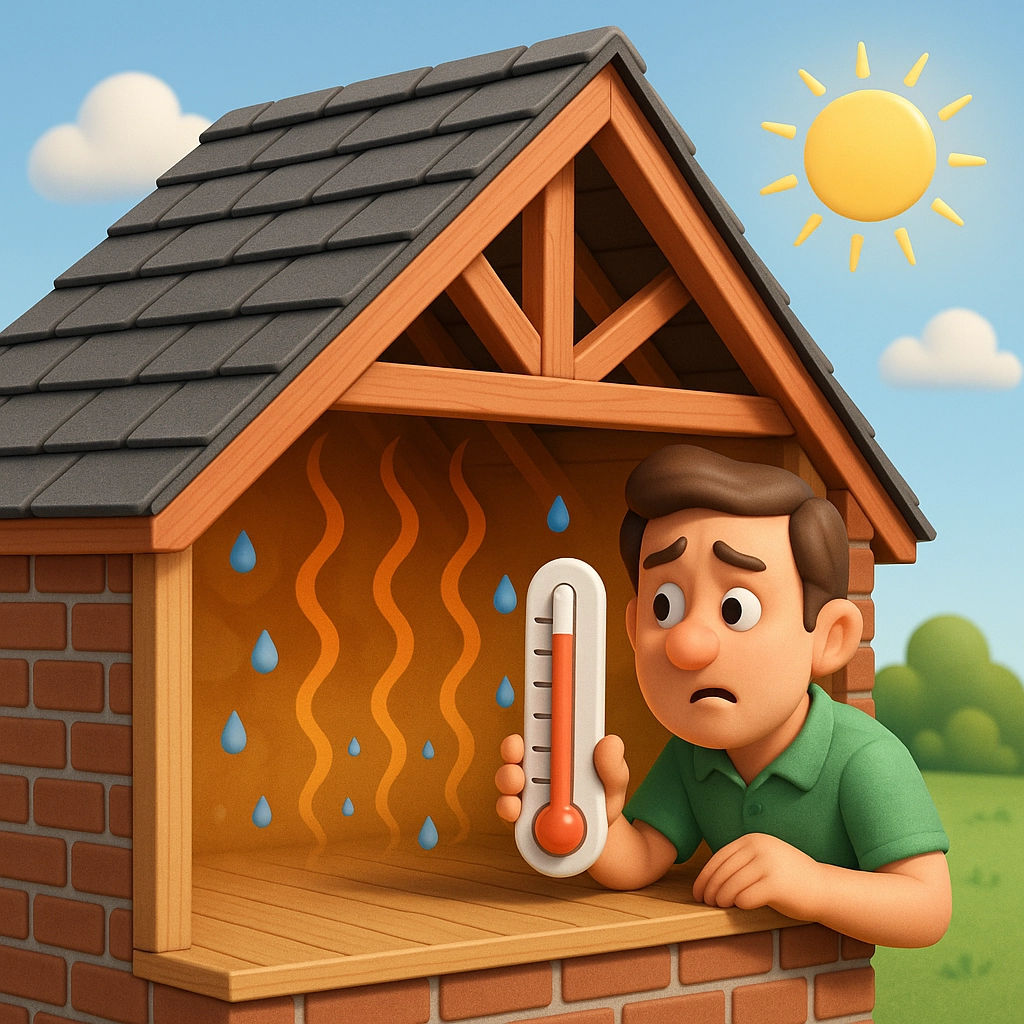
Here are a few perks that come with letting your attic breathe:
Moist air gets trapped inside a closed-up attic, landing on wood and insulation. Over time, that means gross smells, ruined insulation, and even structural rot upstairs.
When your attic is sweltering, your AC works overtime to keep your home cool (and the reverse is true in winter). Ventilation keeps the attic closer to the outdoor temp, so your HVAC system doesn’t go into overtime.
Most shingle warranties are void if there’s mold, rot, or overheated attic conditions. That’s because bad ventilation is the #1 roof killer that most homeowners never see coming.
If your attic is too warm in winter, snow melts on your roof and refreezes at the eaves. That leads to ice dams—which can force water back up under your shingles.
Besides protecting your roof, a well-ventilated attic will cut down on indoor temperature swings, reduce allergens and dust, and help banish that “old attic smell” that seeps downstairs.
The good news? There are several ways to let your attic air out—many of which you can spot yourself!
1. Ridge Vents
These run the length of your roof's peak and let hot, moist air out naturally. Ridge vents work best when paired with soffit vents for balanced airflow.
2. Soffit Vents
Located under the eaves, these let cool, fresh air in. They’re essential! If you’ve got solid wood eaves and no visible vents, you might need to add them. 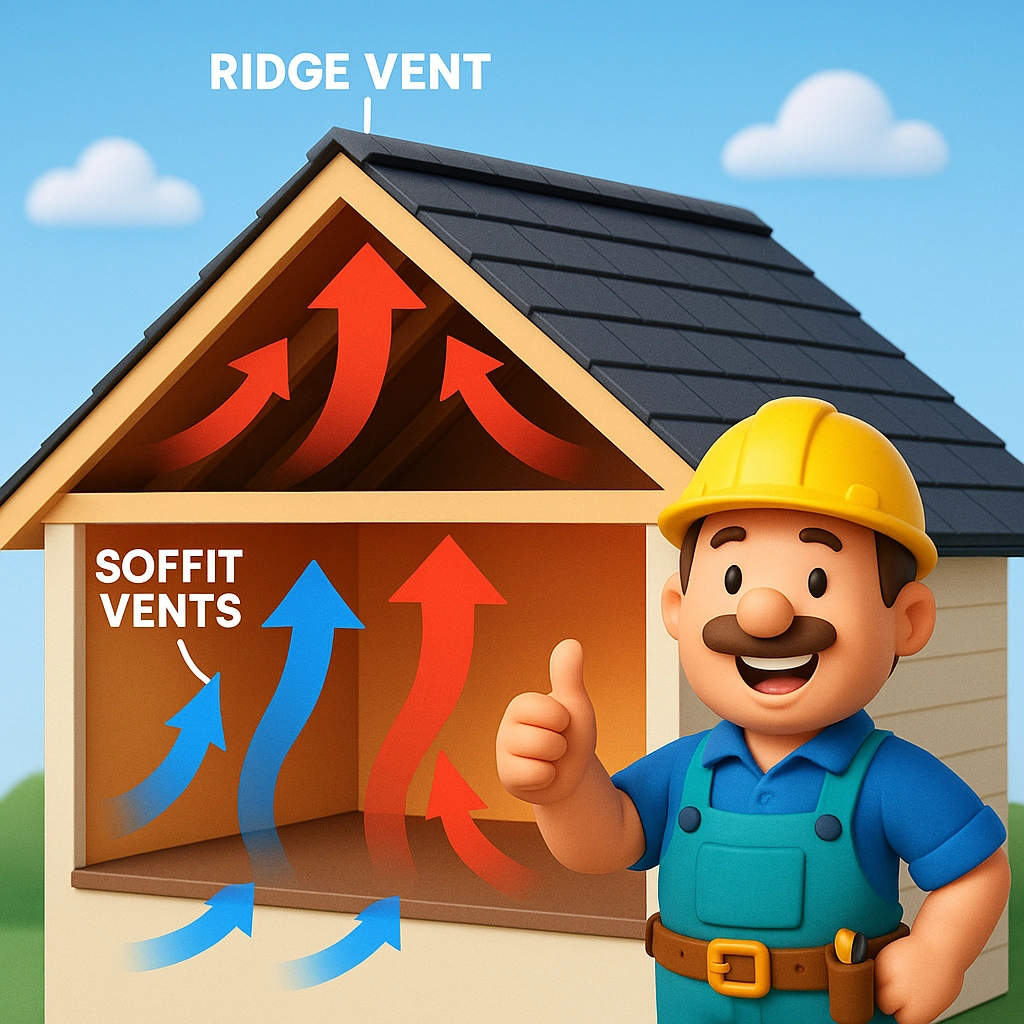
3. Gable Vents
These are placed on the side walls at the peak of your attic. They allow air to move sideways through your attic, supplementing ridge and soffit setups.
4. Powered or Solar Fans
For attics with tricky designs or limited venting, powered attic fans (plug-in or solar) help force air out. They’re great as a boost but work best alongside passive vents—they’re not a total replacement.
Want to get started without spending a fortune? Here are a few ways to boost your attic’s airflow quickly:
Peek up into your attic or walk around outside with binoculars. Has insulation fallen over soffits? Are vents clogged with leaves or dust? Gently clear these out for an instant boost.
Solar fans are plug-and-play, require no wiring, and can make a surprising difference—especially in older homes with limited roof vents.
These are some of the most effective places to get “fresh” air in and “hot” air out. Many homes have a ridge vent but not enough intake—call us if you need help planning a balanced system!
“If you want a healthier, comfier house, start by making the attic less sweaty. Your whole home will thank you,” says one of our senior inspectors.
Besides a longer-lasting roof, you’ll get a noticeable improvement in all of these areas:
What’s not to love?
Sometimes, it’s obvious:
If you spot one or more, it’s time to take a closer look. Need a pro? Our team at Best Roofing Now can give your attic and roof a quick (and honest) checkup.

You don’t need to go it alone. If your attic feels like a sauna or your roof is showing signs of struggle, we’re here to help. Our pros know exactly what to look for—and what to do next—to help you get more years (and fewer headaches) from your roof.
🌬️ Get the Attic Ventilation Guide
Stay cool, Charlotte—and remember, a healthy attic is the not-so-secret ingredient to a roof that goes the distance!
Best Roofing Now
Charlotte's trusted roofing experts since 2019
Need help with your roof? Explore our professional roofing services in Charlotte NC.
Get a free roof inspection and honest assessment from Charlotte's most trusted roofing company.

