
Roofing Tips & Guides
Expert Roofing Advice for Charlotte Homeowners
Learn from Charlotte's trusted roofing experts. Tips on maintenance, repair, replacement, and protecting your home from the elements.
Learn from Charlotte's trusted roofing experts. Tips on maintenance, repair, replacement, and protecting your home from the elements.

Running a business in Charlotte means protecting your investment from every angle. And when it comes to commercial properties, your roof is the first line of defense against North Carolina's unpredictable weather: from summer thunderstorms to occasional ice storms that roll through the Lake Norman area.
I've been helping Charlotte business owners navigate commercial roofing decisions for years. What I've learned is this: flat roof installation isn't just about slapping materials on top of your building. It's about creating a system that works together to protect your business, employees, and equipment for decades to come.
Let me walk you through everything you need to know about commercial flat roofing success.
Commercial flat roofs face challenges your home's pitched roof never will. They support HVAC units weighing thousands of pounds. They handle foot traffic from maintenance crews. And they endure Charlotte's intense summer heat reflecting off surrounding buildings.
Unlike residential roofs that shed water quickly, flat roofs rely on a completely different approach. They're built as layered systems where each component serves a specific purpose. Think of it like building a sandwich: every layer matters, and if one fails, the whole system suffers.
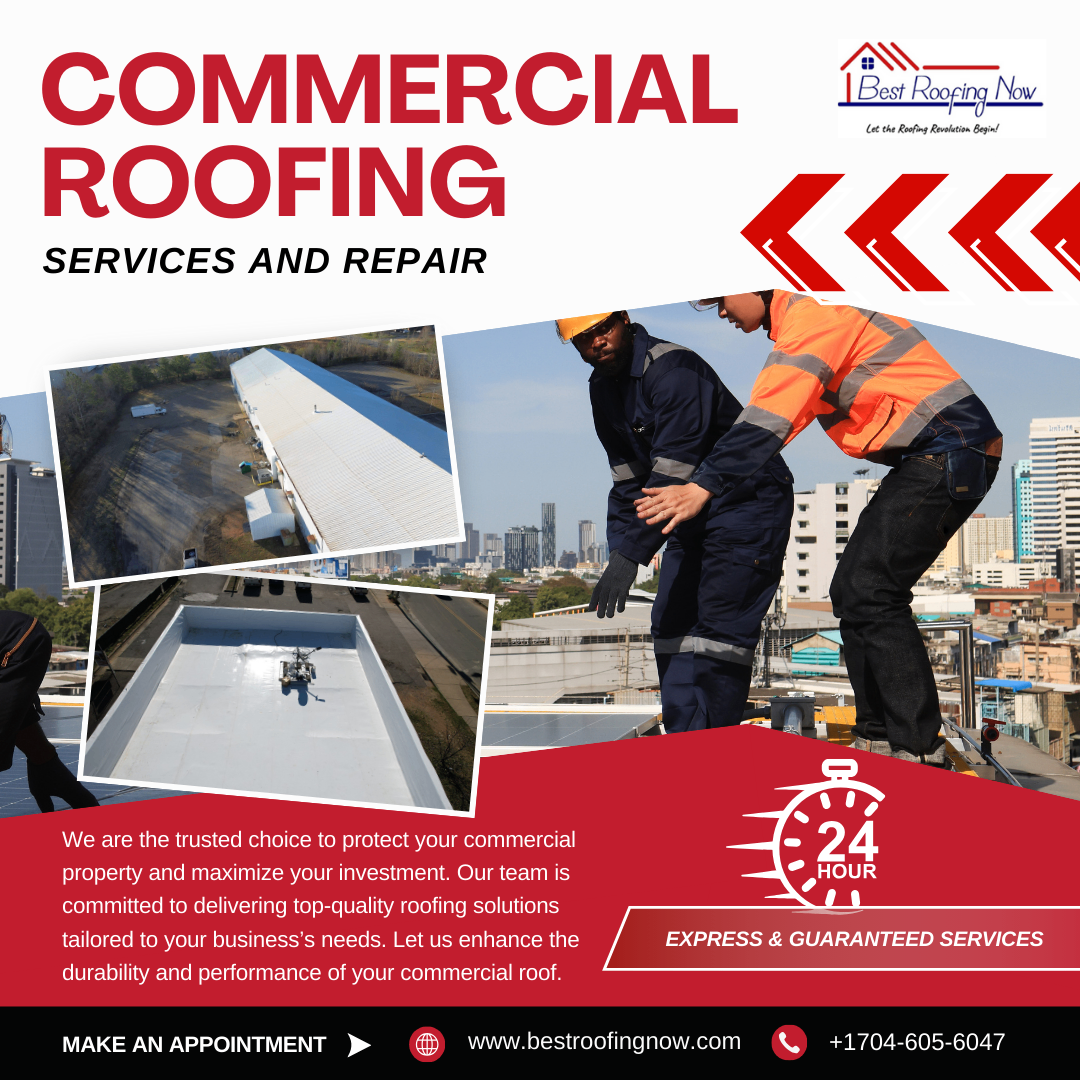
The Foundation: Structural Decking
Your roof system starts with the structural deck. In Charlotte's commercial buildings, we typically see three options:
The Insulation Layer
Above the deck, rigid insulation boards create a thermal barrier that keeps your energy bills manageable. In Charlotte's climate, proper insulation can cut your cooling costs significantly during those brutal summer months.
We typically use polyisocyanurate (ISO) insulation for its high R-value and moisture resistance. It's especially important here because Charlotte's humidity can create condensation problems if you skip this step.
The Waterproof Membrane
This is your roof's armor against the elements. The membrane directly protects your building from rain, sun damage, and temperature swings. In our area, we see everything from afternoon thunderstorms to occasional hail, so this layer needs to be tough.
Flashing and Edge Details
Here's where experience really shows. Around every penetration: vents, chimneys, HVAC units: we install specialized flashing to create watertight seals. Edge details along your roof's perimeter are equally critical. I've seen too many commercial roofs fail because someone cut corners on flashing work.
EPDM (The Reliable Choice)
EPDM rubber roofing is like the pickup truck of commercial roofing: dependable, straightforward, and built to last. It comes in large rolls that we lay over your building's frame, with all seams sealed using specialized adhesive.
What I like about EPDM for Charlotte businesses: it handles our temperature swings well and it's one of the easiest materials to repair when needed.
TPO (The Energy-Efficient Option)
TPO (Thermoplastic Polyolefin) has gained popularity among Charlotte business owners focused on energy efficiency. Its white surface reflects heat, which helps keep your building cooler during summer months.
The installation process is more involved than EPDM. We spread adhesive across the surface area, install a waterproof membrane, then apply the TPO material on top. It's similar to traditional built-up roofing but requires fewer steps.
PVC (The Heavy-Duty Solution)
For businesses with heavy roof traffic or chemical exposures, PVC offers superior durability. We start with felt paper as a base layer, then install PVC sheets with heat-welded seams that create incredibly strong bonds.
PVC costs more upfront but can outlast other materials in demanding commercial environments.
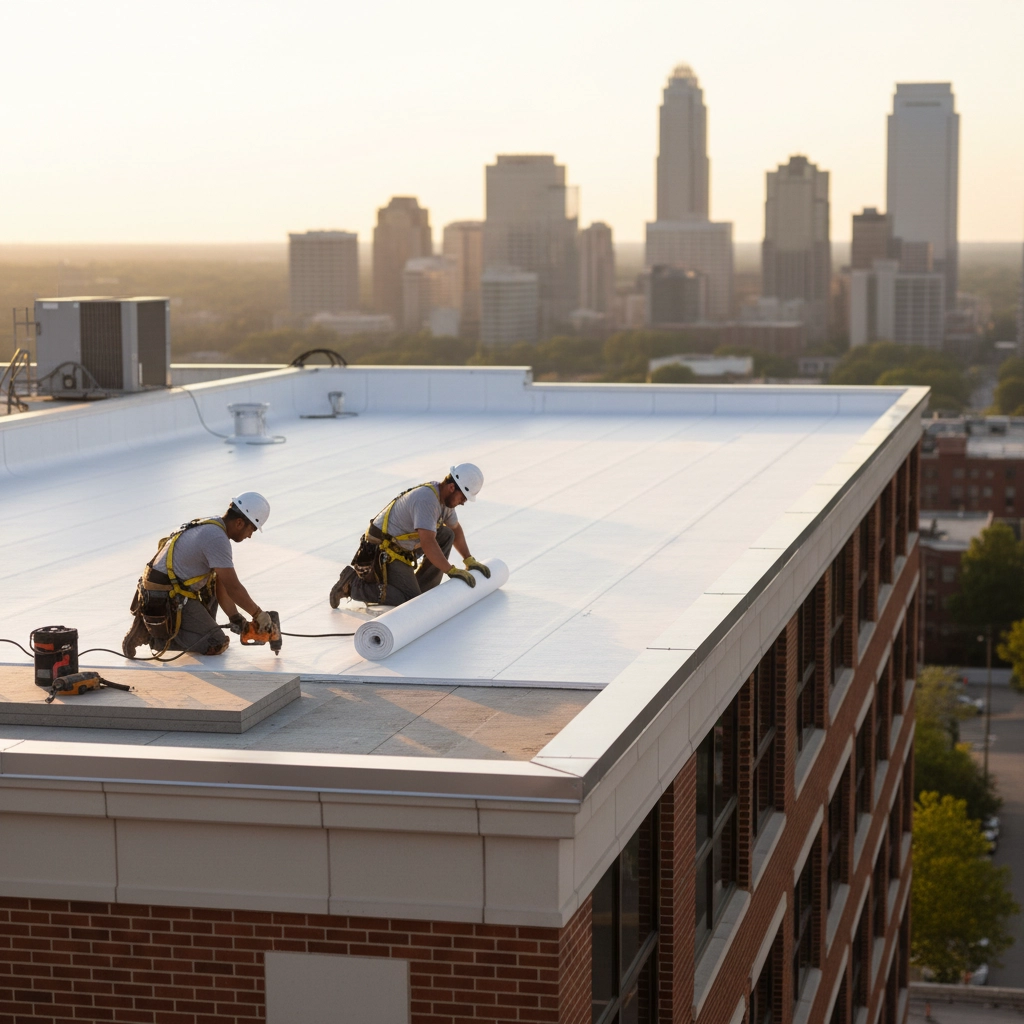
Phase 1: Assessment and Planning (1-2 Days)
Before we touch your roof, we conduct a thorough inspection. We're looking at your building's current condition, identifying any structural issues, and determining whether your existing structure can support a new roofing system.
During this phase, we also review local building codes and assess environmental factors specific to your location. Charlotte's building codes have specific requirements for wind uplift resistance that we must meet.
Phase 2: Removal and Preparation (2-5 Days)
If you're replacing an existing roof, we carefully strip away old materials. This tear-off process reveals underlying issues that need attention before installation begins.
Any structural repairs happen now. We fix damaged decking, reinforce weak areas, and ensure your building can properly support the new roofing system.
Phase 3: System Installation (3-7 Days)
Now the real work begins. We install rigid insulation boards, mechanically fastened to meet energy code requirements. Then comes the waterproof membrane, applied using the method appropriate for your chosen material.
The final steps involve flashing and detail work around edges, seams, and penetrations. This is where craftsmanship really matters. Poor flashing work is the leading cause of commercial roof failures.
Phase 4: Inspection and Quality Assurance (1 Day)
We perform a comprehensive final inspection, checking every seam, every flashing detail, and ensuring compliance with all building codes and manufacturer specifications.
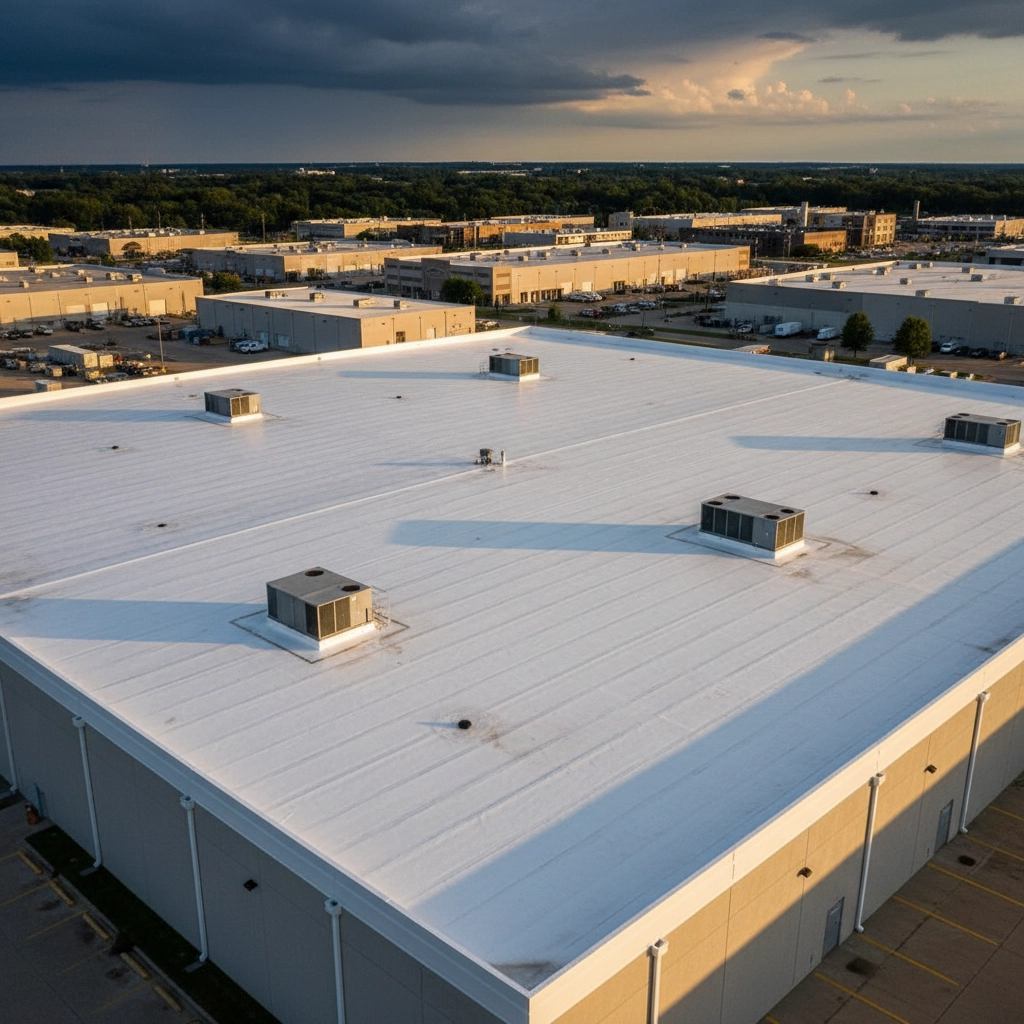
Most commercial flat roof projects in our area range from 5 days to 3 weeks, depending on size and complexity. Smaller buildings (under 10,000 square feet) typically take 5-10 days. Larger commercial properties may require 2-3 weeks.
Weather plays a role too. Charlotte's afternoon thunderstorms can delay progress, especially during membrane installation when dry conditions are essential. We always build weather delays into our project timeline.
Local Building Code Compliance
Charlotte's building codes require specific wind uplift ratings due to our occasional severe weather. Your roof must meet these standards, not just for legal compliance, but for insurance coverage and long-term performance.
Structural Engineering
Your roof system must complement your building's structure and handle expected loads. This includes HVAC equipment, foot traffic, and environmental loads like wind and occasional snow.
Drainage Design
Even "flat" roofs need proper drainage. We design slight slopes to direct water toward drains and prevent pooling. Standing water is a flat roof's worst enemy: it leads to premature membrane failure and potential leaks.
Quality Installation Team
This isn't a DIY project. Commercial flat roof installation requires specialized skills, proper equipment, and knowledge of local conditions. We use trained installation crews who understand Charlotte's climate challenges.
Choosing Materials Based on Price Alone
The cheapest option rarely delivers the best value. Consider your building's specific needs, expected lifespan, and total cost of ownership over 15-20 years.
Ignoring Insulation Requirements
Skipping proper insulation to save money upfront will cost you thousands in energy bills over your roof's lifetime. In Charlotte's climate, good insulation pays for itself within a few years.
Poor Drainage Planning
Water pooling on flat roofs leads to premature failure. Ensure your contractor designs adequate drainage for Charlotte's heavy rainfall patterns.
Commercial flat roof installation represents a significant investment in your business's future. Done right, it protects your operations, controls energy costs, and provides decades of reliable service.
The key is working with experienced professionals who understand both the technical requirements and local conditions that affect performance in the Charlotte area.
If you're considering a new commercial flat roof or evaluating your current system, we'd be happy to provide a comprehensive assessment. Our team has helped hundreds of Charlotte businesses make informed roofing decisions that protect their investments and support their growth.
Ready to discuss your commercial roofing needs? Contact Best Roofing Now for a free consultation. We'll assess your current situation, explain your options, and help you choose the right solution for your business. Your building deserves protection that works as hard as you do.
Best Roofing Now
Charlotte's trusted roofing experts since 2019
Need help with your roof? Explore our professional roofing services in Charlotte NC.
Get a free roof inspection and honest assessment from Charlotte's most trusted roofing company.

