
Roofing Tips & Guides
Expert Roofing Advice for Charlotte Homeowners
Learn from Charlotte's trusted roofing experts. Tips on maintenance, repair, replacement, and protecting your home from the elements.
Learn from Charlotte's trusted roofing experts. Tips on maintenance, repair, replacement, and protecting your home from the elements.

Your flat roof replacement timing can make or break your business operations. We've seen Charlotte area businesses lose thousands in revenue because they scheduled roof work during peak season. But we've also helped smart business owners save money and headaches by choosing the right window.
The sweet spot? Late spring through early summer offers the best balance of weather, contractor availability, and minimal disruption to your operations. Early fall runs a close second. Here's everything you need to know to make the right choice for your Lake Norman area business.
Most business owners think about flat roof replacement like any other maintenance project. Schedule it when convenient, get it done, move on. But flat roofs are different beasts entirely.
Unlike residential steep-slope roofs, flat roof replacement often requires complete building access restrictions. Your HVAC units might need temporary relocation. Loading docks could be off-limits for days. And if weather delays the project, those restrictions stretch longer than planned.
We replaced a 15,000 square foot flat roof for a Mooresville distribution center last spring. The owner initially wanted to schedule during their busy holiday shipping season. We convinced him to move it to May instead. The project finished two days ahead of schedule, and he avoided shutting down operations during their most profitable quarter.
That's the power of smart scheduling.
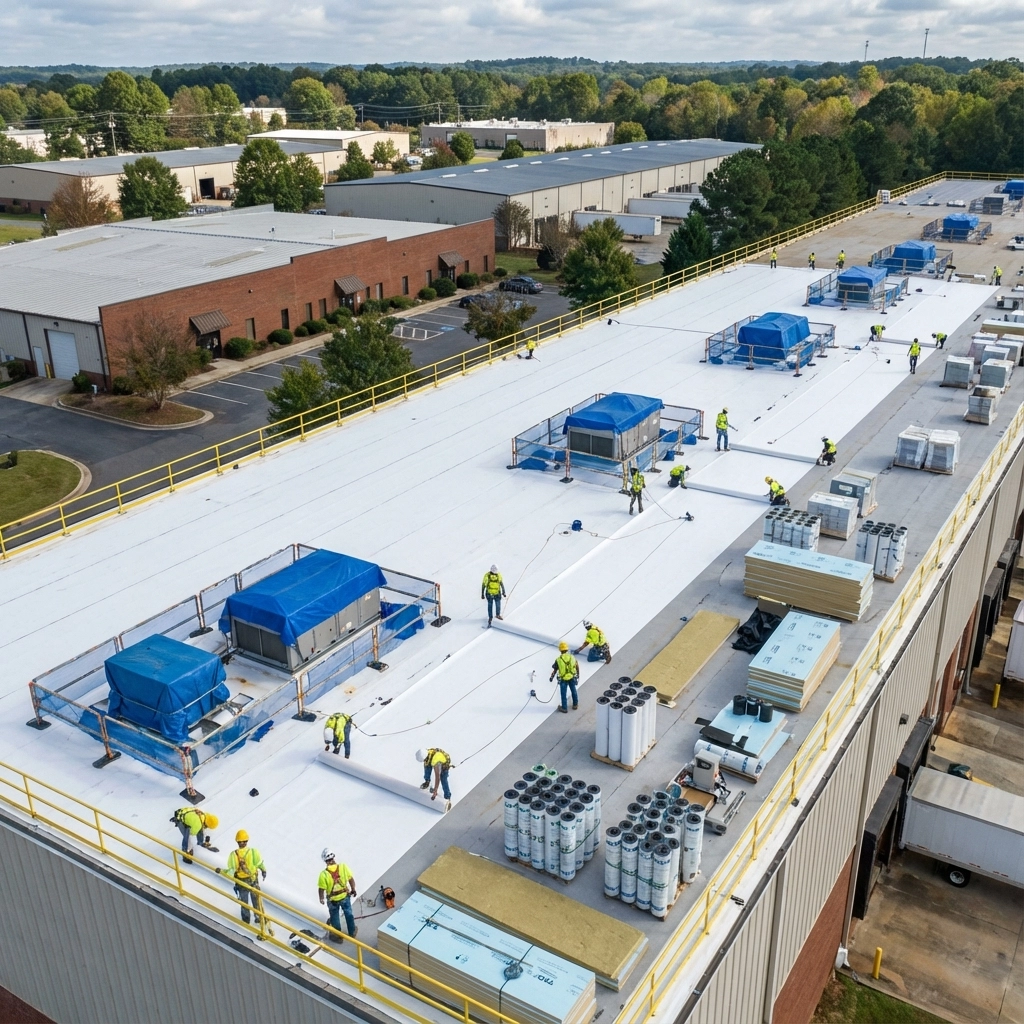
May through July represents your best bet for flat roof replacement in the Charlotte metro area. Here's why this timing works so well for businesses:
Weather Stability You Can Count On
Spring and early summer offer the most predictable weather patterns. We track weather data for every project, and May through July shows the lowest chance of multi-day rain delays. When contractors can work consistently, your project timeline stays on track.
Material Performance at Its Peak
Flat roof materials like EPDM, TPO, and modified bitumen perform best in moderate temperatures. Too hot, and adhesives cure too quickly. Too cold, and they don't bond properly. The 60-80 degree range common in late spring gives us perfect working conditions.
Extended Daylight Hours
Longer days mean more productive work hours. We can start earlier and finish later without compromising safety or quality. A project that might take five days in winter can finish in three during summer months.
Contractor Availability and Focus
While not the slowest season, late spring offers better contractor availability than fall's rush period. We can dedicate our full attention to your project instead of juggling multiple emergency repairs from storm damage.
September through early October works well for businesses that missed the spring window. Fall scheduling offers some unique advantages:
Post-Summer Equipment Check
Your HVAC systems have worked hard all summer. Fall roof replacement lets you inspect and service rooftop units while they're already disconnected. It's efficient timing for comprehensive building maintenance.
Preparation for Winter
A new roof installed in fall has time to settle and seal before winter weather arrives. This is especially important for flat roofs, which need proper drainage systems to handle snow loads and ice dams.
But fall has drawbacks too. Contractor availability becomes tight as everyone rushes to finish projects before winter. Emergency storm repairs also compete for scheduling slots.
Winter: December Through February
Charlotte winters might seem mild, but they're terrible for flat roof work. Here's what we see during winter projects:
We only recommend winter flat roof replacement for true emergencies. Even then, we often suggest temporary repairs to get you through to spring.
Late Summer: August Through September
August heat in the Charlotte area regularly exceeds 90 degrees. On a flat roof with no shade, surface temperatures can hit 140 degrees or higher. This extreme heat creates serious problems:
We've had August projects where we could only work from 6 AM to 10 AM safely. That kind of limited schedule doubles your project timeline.

Understanding Charlotte's Weather Patterns
We've worked on flat roofs throughout the Lake Norman region for over a decade. Each microclimate presents unique challenges:
Mooresville and Davidson tend to get afternoon thunderstorms during summer months. These quick, intense storms can shut down work for hours but rarely delay projects overnight.
Cornelius and Huntersville see more consistent weather patterns due to lake effects. The thermal mass of Lake Norman moderates temperature swings, giving us better working conditions year-round.
Sherrills Ford and Denver experience more rural weather patterns. Less urban heat island effect means cooler morning temperatures – great for summer work.
Hurricane Season Considerations
Hurricane season runs June through November, with peak activity August through October. While direct hits are rare, tropical systems bring heavy rains and wind that can delay flat roof projects.
We maintain detailed hurricane tracking for all active projects. If a system enters the Gulf or approaches the Carolina coast, we secure the job site and resume work after conditions improve. It's better to pause than risk weather damage to your new roof.
Not every flat roof issue requires immediate replacement. Here's how we help Lake Norman businesses decide:
Replace Immediately – Don't Wait for Perfect Timing
Safe to Schedule During Optimal Window
We perform free inspections to help Charlotte area businesses make this determination. Sometimes temporary repairs can buy you time to schedule replacement during the ideal window.
Smart scheduling only gets you halfway there. Here's how we minimize business disruption during the actual work:
Phased Replacement Strategy
For large flat roofs, we can replace sections while keeping others operational. A 20,000 square foot warehouse might get replaced in four 5,000 square foot phases. This keeps critical business functions running throughout the project.
After-Hours and Weekend Work
Many Charlotte area businesses operate Monday through Friday, 8 AM to 5 PM. We can schedule disruptive work during evenings and weekends when your operations are quiet. Yes, this costs slightly more, but it's often cheaper than lost business revenue.
Temporary Weatherization
If weather threatens to delay your project, we install temporary weather barriers to keep your building dry. This prevents the "open roof, closed business" scenario that costs thousands in lost revenue.
Coordinate Utility Shutdowns
We work directly with your HVAC contractors to minimize system downtime. Often, we can complete roof work around existing equipment and reconnect everything the same day.
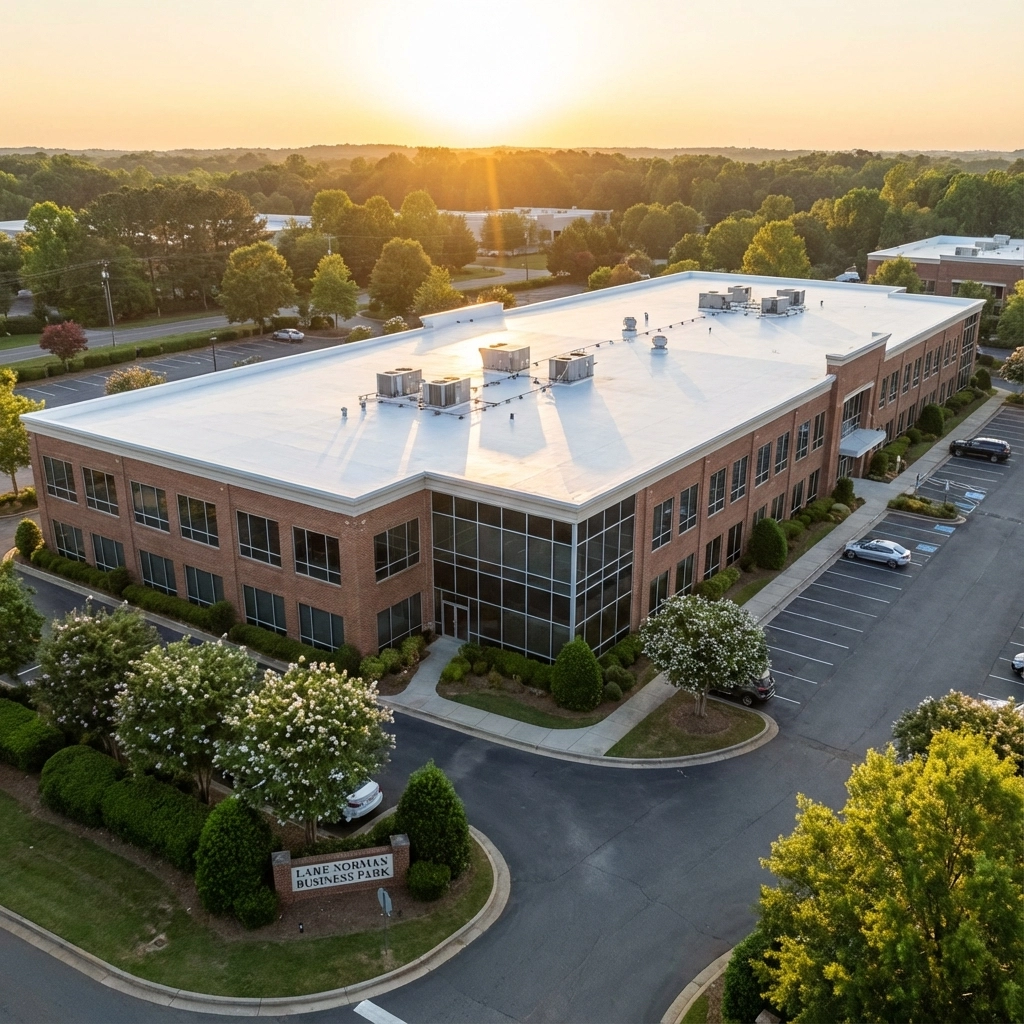
The consultation process makes or breaks your timeline. Here's what quality contractors do differently:
Detailed Site Assessment
We don't just look at your roof. We examine your entire operation to understand how roof work affects your business. Loading dock access, employee parking, customer traffic patterns – everything factors into our scheduling recommendations.
Realistic Timeline Projections
Beware of contractors who promise unrealistic completion dates. A quality 10,000 square foot flat roof replacement typically takes 5-7 working days in good weather. Anyone promising faster completion is likely cutting corners.
Weather Contingency Planning
Professional contractors build weather delays into project schedules. We monitor forecasts constantly and communicate any timing changes immediately. Surprises kill business schedules.
Material Delivery Coordination
Large flat roof projects require significant material deliveries. We coordinate with your operations team to ensure delivery trucks don't block critical business access points.
Manufacturing and Warehouse Operations
These businesses often have specialized rooftop equipment – large HVAC units, exhaust systems, cranes. Replacement timing must coordinate with production schedules. We typically recommend late spring when demand is moderate but weather is stable.
Retail Businesses
Customer access is critical. We schedule disruptive work during off-peak hours and maintain clear pedestrian pathways. For Lake Norman area retail, avoid holiday seasons and back-to-school periods.
Office Buildings
Professional environments need quiet work zones and maintained professional appearance. We use sound barriers and keep work areas clean throughout the project.
Restaurants and Food Service
Health department regulations complicate roof work above food preparation areas. We coordinate with local inspectors and maintain required separations throughout the project.
Smart timing saves money beyond just minimizing downtime:
Seasonal Pricing Variations
Spring and early summer typically offer the best contractor rates. Fall brings premium pricing as contractors get busy with storm repairs and winter prep work.
Material Availability
Popular roofing materials sometimes face shortages during peak seasons. Spring scheduling ensures better material availability and pricing.
Insurance Considerations
If you're filing an insurance claim for storm damage, timing becomes critical. Most policies require repairs within specific timeframes to maintain coverage. We work directly with insurance adjusters to meet required deadlines.
Energy Cost Impact
A failing flat roof increases heating and cooling costs dramatically. Replacing during moderate weather months means lower temporary energy costs while work is ongoing.
Start planning at least 90 days before your desired completion date. Here's our recommended timeline:
90 Days Before: Initial Consultation
Schedule inspections with 2-3 qualified contractors. Get detailed quotes and timeline estimates. Check references from similar commercial projects.
60 Days Before: Contractor Selection and Permits
Choose your contractor and finalize project scope. Apply for required building permits. Order any specialized materials with long lead times.
30 Days Before: Final Coordination
Confirm project timeline with all stakeholders. Arrange temporary space for displaced equipment or operations. Notify employees, customers, and vendors about potential disruptions.
Project Week: Daily Communication
Maintain daily contact with your project manager. Address concerns immediately before they impact timelines. Document progress with photos for future reference.
According to the National Roofing Contractors Association, "Proper planning prevents 80% of commercial roofing project delays. Weather accounts for only 15% of delays – the rest come from poor coordination and unrealistic scheduling."
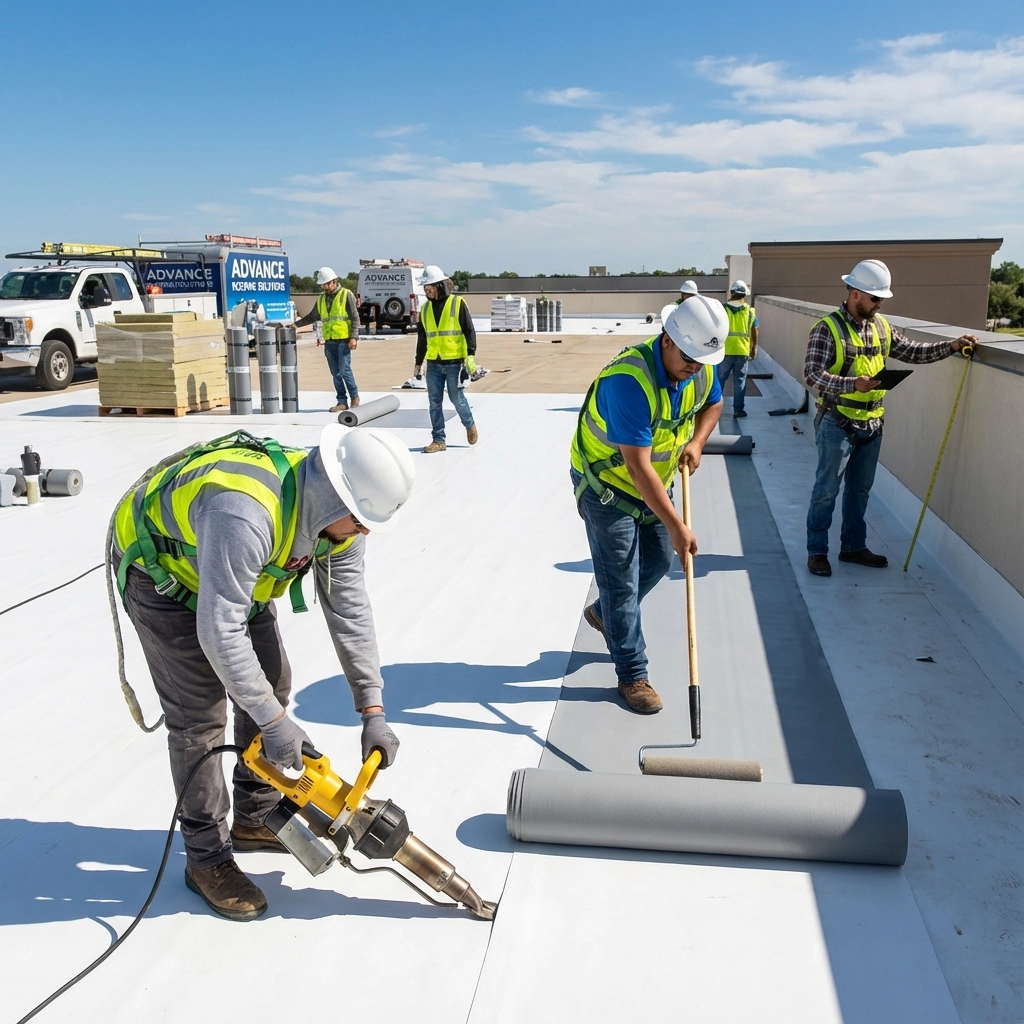
Today's flat roofing technology makes replacement faster and less disruptive:
Spray-Applied Systems
These systems can be applied over existing roofs in many cases, eliminating tearoff time and debris. A spray-applied roof can often be completed in 2-3 days instead of a week.
Self-Adhering Membranes
Modern self-adhering systems eliminate hot asphalt and torch applications. This means safer, faster installation with less disruption to your business operations.
Drone Inspections
We use drone technology for pre-project inspections and progress monitoring. This reduces the need for workers on your roof during business hours.
Sustainable roofing practices matter to Charlotte area businesses:
Cool Roof Technology
White and light-colored roofing systems reduce cooling costs significantly. In Charlotte's hot summers, cool roofs can cut air conditioning costs by 15-20%.
Recycling Existing Materials
We recycle old roofing materials whenever possible. This reduces landfill waste and often provides small cost credits to offset project expenses.
Stormwater Management
New flat roofs can incorporate green infrastructure like blue roofs for stormwater detention. This helps Lake Norman area businesses meet municipal stormwater requirements.
The best time for your flat roof replacement depends on your specific situation, but here are our general recommendations:
If your roof is failing now: Don't wait. Emergency repairs can get you through to the optimal replacement window if the damage isn't severe.
If you have 6-12 months: Plan for late spring replacement (May-June). Start contractor selection in February.
If you missed spring: Early fall (September-October) is your next best bet. Book immediately as contractor schedules fill quickly.
If it's currently winter: Plan temporary repairs and schedule replacement for the following spring. Use this time to research contractors and secure permits.
We've guided hundreds of Lake Norman area businesses through flat roof replacement timing decisions. The businesses that plan ahead always get better results – faster completion, lower costs, and minimal operational disruption.
Your flat roof replacement doesn't have to shut down your business or break your budget. Smart timing, careful planning, and the right contractor make all the difference.
Ready to discuss your flat roof replacement timeline? We offer free consultations and detailed project planning for Charlotte and Lake Norman area businesses. Our team will assess your current roof condition, understand your operational requirements, and recommend the optimal scheduling strategy for your situation.
Call us today at (704) 593-7450 to schedule your free flat roof assessment and project consultation. Let's find the perfect timing window that protects your business investment while keeping your operations running smoothly.
Best Roofing Now
Charlotte's trusted roofing experts since 2019
Need help with your roof? Explore our professional roofing services in Charlotte NC.
Get a free roof inspection and honest assessment from Charlotte's most trusted roofing company.


