Roofing Tips & Guides
Expert Roofing Advice for Charlotte Homeowners
Learn from Charlotte's trusted roofing experts. Tips on maintenance, repair, replacement, and protecting your home from the elements.
Learn from Charlotte's trusted roofing experts. Tips on maintenance, repair, replacement, and protecting your home from the elements.

Running a commercial property in Mooresville means juggling countless responsibilities. Your roof shouldn't be one of them: but ignoring it could cost you thousands in emergency repairs and lost business revenue.
After two decades of maintaining commercial roofs across Mooresville and the greater Charlotte region, I've learned that smart property managers don't wait for problems. They prevent them.
Here are the maintenance hacks that keep Mooresville businesses operating smoothly while protecting their bottom line.
Mooresville's unpredictable weather patterns: from summer thunderstorms to winter ice: can wreak havoc on commercial roofs. But here's what most property managers miss: the real damage often happens 24-72 hours after severe weather passes.
The hack: Schedule automatic post-storm inspections within 72 hours of any weather event with winds over 40 mph or hail. Don't wait for visible leaks.
Why this works: Small punctures and loose flashings cause gradual water intrusion that shows up weeks later as ceiling stains, mold growth, or electrical issues. By then, you're looking at interior repairs that cost 10x more than fixing the roof damage immediately.
I've seen this save Mooresville manufacturing facilities tens of thousands in downtime costs. One client caught wind-damaged membrane seams after last spring's storms: a $800 repair that would have become a $15,000 interior restoration project.
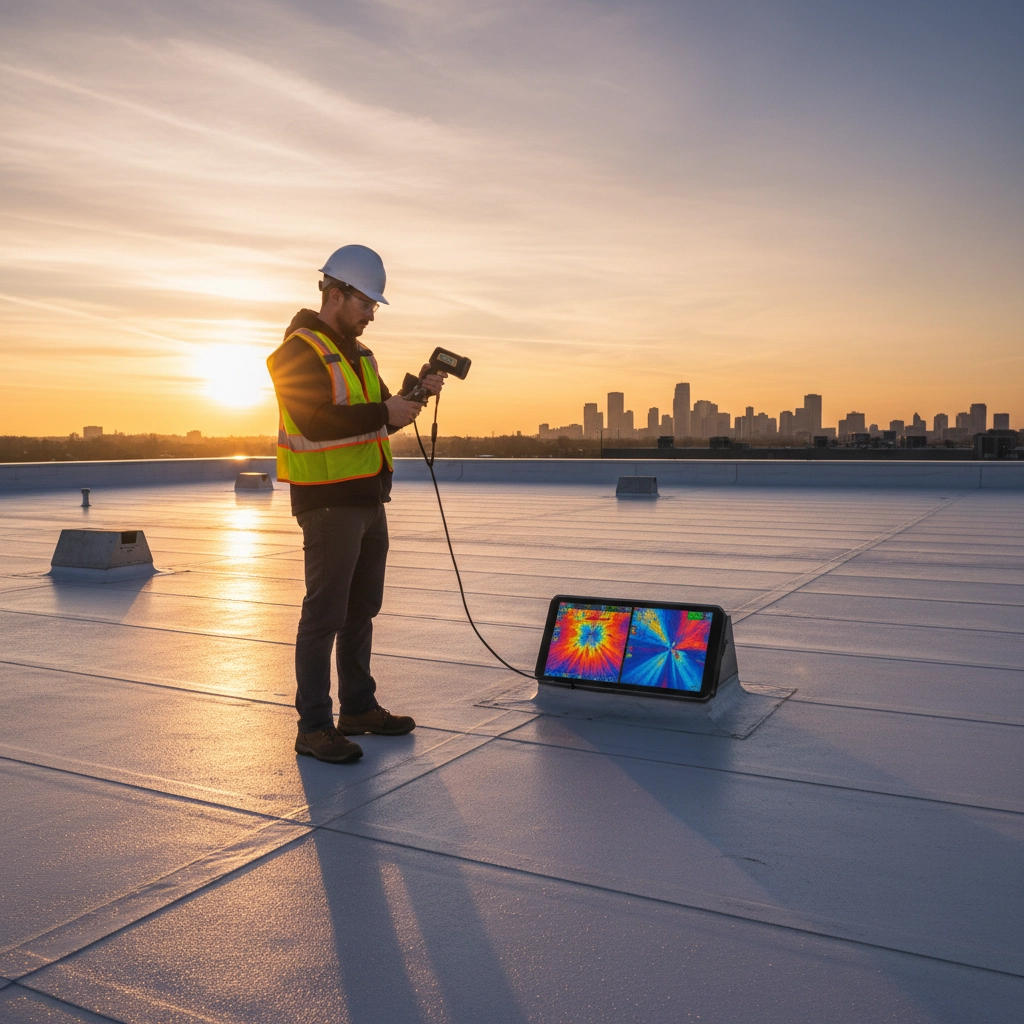
Most commercial roof inspections rely on visual checks. But the smartest property managers in Mooresville use thermal imaging cameras during routine maintenance.
The hack: Conduct thermal scans on cool mornings (before 10 AM) or after sunset. Wet insulation and hidden leaks show up as temperature variations invisible to the naked eye.
Many commercial roofing contractors now offer thermal imaging as part of their maintenance packages. This technology reveals:
One Mooresville retail center discovered moisture infiltration affecting 30% of their roof area: with zero visible signs from ground level. Early detection saved them a complete roof replacement.
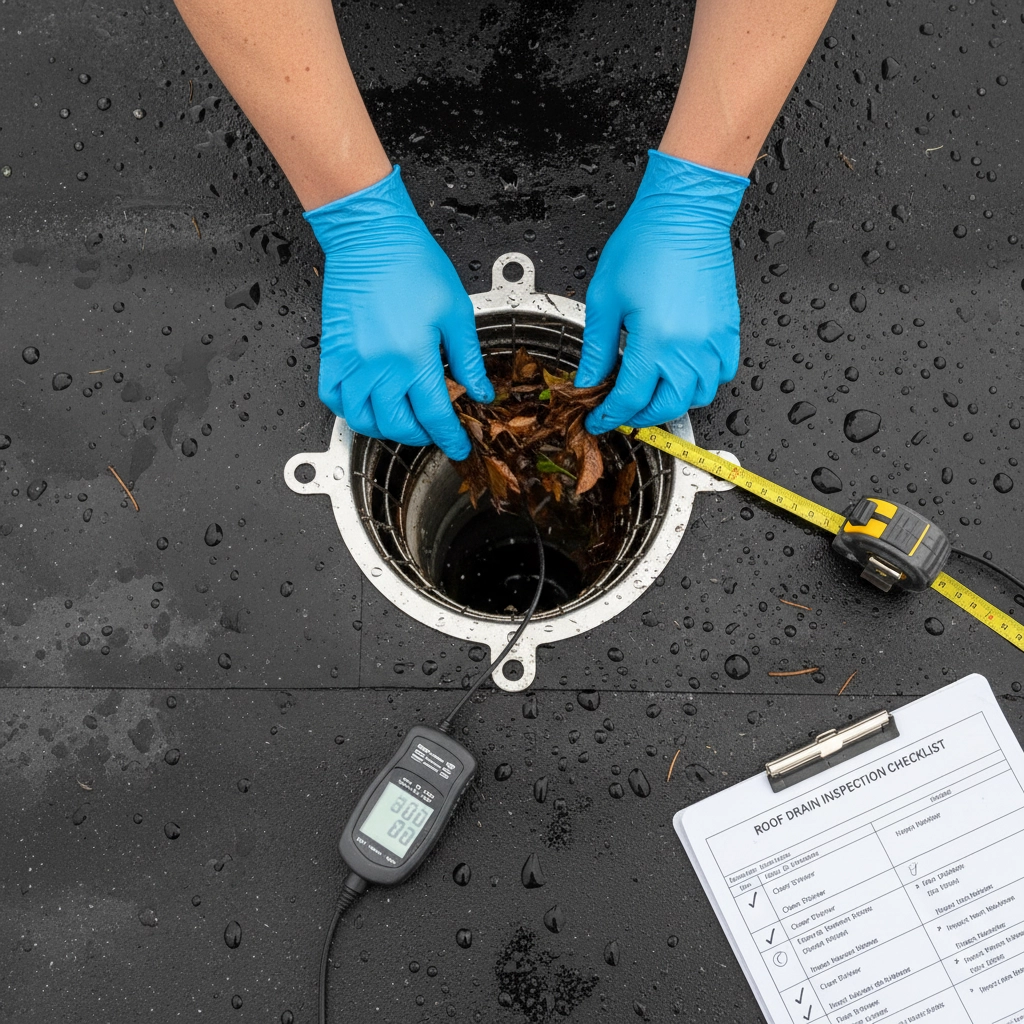
Clogged drains destroy more commercial roofs than wind, hail, and age combined. But most property managers only check drains when water backs up.
The hack: Implement the five-point drain inspection system every quarter:
This takes 15 minutes per drain but prevents catastrophic flooding. I've seen backed-up drains cause $50,000+ in damage during Mooresville's heavy spring rains.
Pro tip: Install drain guards to catch debris before it enters your drainage system. They're $20 each but can save thousands in emergency cleanouts.
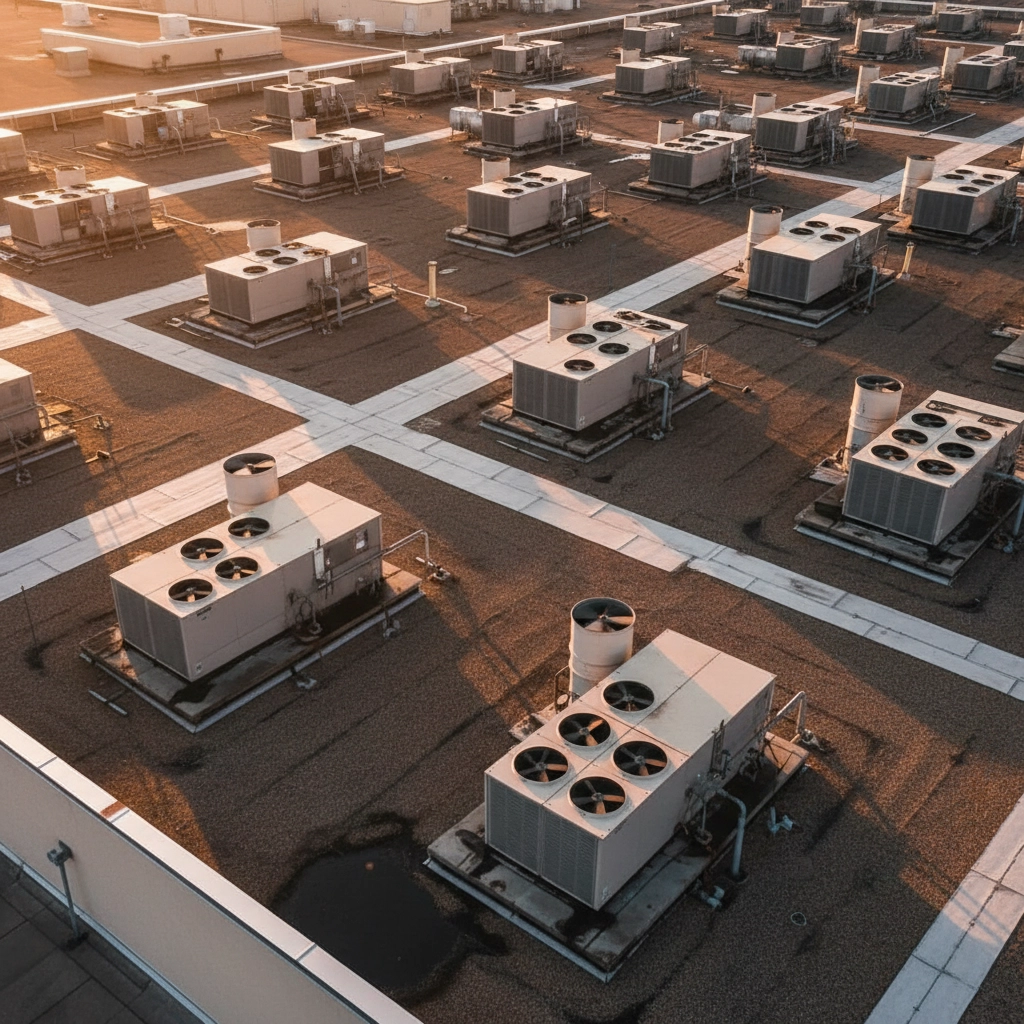
Every piece of rooftop equipment: HVAC units, exhaust fans, satellite dishes: creates maintenance shadows where problems hide.
The hack: Focus 80% of your inspection time on the 18-inch radius around equipment bases, not the open roof areas.
Here's why: Equipment vibrations work flashings loose. Condensation creates moisture pockets. Installation crews often cut corners on waterproofing around penetrations because "nobody will see it up there."
Check these areas monthly:
The most expensive roof failures I've seen in Mooresville started with loose equipment flashings: small problems that became major structural issues.
Most commercial property managers schedule roof maintenance when it's convenient. Smart ones time it strategically.
Spring hack (March-April): Schedule major inspections before Mooresville's severe weather season. Repair winter damage while contractors have availability and competitive pricing.
Summer hack (July-August): Focus on membrane and coating maintenance. Hot weather helps materials cure properly, creating stronger repairs.
Fall hack (September-October): Clean gutters and drains before leaf season peaks. Install temporary guards if your building is near mature trees.
Winter hack (December-February): Plan major repairs and replacements. Contractors offer better pricing during slow season, and you'll be ready for spring storms.
This timing strategy can reduce maintenance costs by 20-30% annually while improving repair quality.
Here's a hack most property managers never consider: detailed maintenance records actually reduce repair costs.
The system: Photograph every inspection, repair, and cleaning. Date-stamp everything. Store photos in a cloud-based system accessible from your phone.
Why this works:
One Mooresville office complex used their photo documentation to prove storm damage occurred within their warranty period. They received a full roof replacement at no cost: a $75,000 savings.
Most property managers treat roofs and HVAC systems separately. That's expensive thinking.
The hack: Coordinate roof and HVAC maintenance schedules. Many rooftop equipment issues stem from poor drainage around units or inadequate support structures.
Work with your HVAC contractor to:
This coordination prevents the "blame game" between contractors when problems arise.
Smart Mooresville property managers link roof maintenance with energy efficiency monitoring. Poor roof conditions directly impact HVAC performance and utility costs.
The hack: Track monthly energy usage alongside roof maintenance activities. Sudden spikes often indicate roof-related air infiltration or insulation problems.
Signs your roof affects energy costs:
Addressing roof-related energy loss often pays for itself within 12-18 months through reduced utility bills.
The biggest maintenance hack isn't technical: it's relationship-based. Develop long-term partnerships with qualified commercial roofing contractors who understand your specific needs.
What to look for:
At Best Roofing Now, we've maintained commercial properties across Mooresville for years. Our clients save thousands annually because we catch problems early and provide consistent, reliable service.
The right contractor becomes your roof care partner, not just someone you call during emergencies.
Every Mooresville commercial property should have an emergency roof response plan. Here's the framework that works:
Immediate response kit: Keep emergency tarps, roof sealant, and basic tools on-site. Many leaks can be temporarily controlled until professional help arrives.
Contractor hotline: Establish relationships with 2-3 emergency roofing contractors before you need them. Get written agreements on response times and emergency rates.
Documentation protocol: Know how to safely photograph roof damage for insurance claims. Take wide shots showing overall damage and close-ups of specific problems.
Tenant communication: Have a system to quickly notify tenants about roof-related building issues. Clear communication prevents panic and liability concerns.
Most commercial property managers budget for roof maintenance reactively. Proactive budgeting saves money long-term.
The hack: Allocate 1-3% of your building's value annually for roof maintenance and repairs. For a $1 million building, that's $10,000-$30,000 per year.
Break it down:
This approach prevents expensive emergency repairs that disrupt business operations. You're also more likely to catch problems early when repairs cost less.
Modern commercial roof maintenance benefits from simple technology integration.
Weather monitoring apps: Set alerts for severe weather approaching Mooresville. This gives you advance notice to secure loose items and prepare for post-storm inspections.
Maintenance scheduling software: Digital reminders ensure routine tasks don't get forgotten during busy periods.
Photo organization systems: Cloud storage with automatic date stamps creates permanent maintenance records accessible anywhere.
Vendor management platforms: Track contractor performance, warranties, and service history in one location.
These tools don't replace good judgment, but they help busy property managers stay organized and proactive.
Every maintenance decision should consider return on investment. Here's how to think about roof maintenance financially:
High ROI activities:
Medium ROI activities:
Questionable ROI activities:
Focus your budget on high-impact activities that protect your investment and business operations.
The bottom line for Mooresville commercial property managers: proactive roof maintenance isn't an expense: it's insurance against business disruption and major repair costs.
Your roof protects everything inside your building: inventory, equipment, employees, and operations. A strategic maintenance approach keeps it functioning reliably while you focus on growing your business.
Ready to develop a maintenance plan that protects your Mooresville commercial property? Connect with our team through the Lake Norman Chamber of Commerce or schedule a comprehensive roof evaluation today.
Take action now: Schedule your next commercial roof inspection within the next 30 days. Don't wait for problems to find you: find them first when repairs are affordable and manageable.
Best Roofing Now
Charlotte's trusted roofing experts since 2019
Based on this article, you may be interested in these services.
We proudly serve these Charlotte-area communities with professional roofing services.
View All Service Areas →Get a free roof inspection and honest assessment from Charlotte's most trusted roofing company.