Roofing Tips & Guides
Expert Roofing Advice for Charlotte Homeowners
Learn from Charlotte's trusted roofing experts. Tips on maintenance, repair, replacement, and protecting your home from the elements.
Learn from Charlotte's trusted roofing experts. Tips on maintenance, repair, replacement, and protecting your home from the elements.

Your roof protects everything you love most. But here in Charlotte and Lake Norman, our roofs face unique challenges that many homeowners don't fully understand.
Between our humid summers, sudden thunderstorms, and occasional ice storms, your roof works overtime year-round. That's why knowing how to inspect your own roof can save you thousands of dollars and prevent minor issues from becoming major headaches.
As someone who's been in the roofing business for years, I've seen too many homeowners wait until water starts dripping into their living room before they realize something's wrong. The good news? Most roof problems give you plenty of warning signs if you know what to look for.
This comprehensive checklist will teach you exactly what to inspect, when to inspect it, and most importantly – when it's time to call in the professionals.
Living in the Charlotte-Lake Norman region means your roof battles specific weather challenges that homeowners in other parts of the country don't face. Our hot, humid summers create perfect conditions for algae and moss growth. Our spring and summer storms can deliver golf ball-sized hail and damaging winds. And when winter ice storms hit, they can cause serious damage to unprepared roofs.
Regular inspections help you catch these issues early. Think of it like getting your car's oil changed – a little prevention goes a long way toward avoiding expensive repairs later.
Most roofing problems don't happen overnight. Shingles gradually wear down. Flashing slowly develops gaps. Gutters start to sag over time. When you inspect your roof every season, you'll spot these changes before they turn into leaks.
Before we dive into what to look for, let's talk safety. I've been on thousands of roofs, and I can tell you that even experienced roofers take precautions every single time.
Never climb onto your roof if it's wet, windy, or if you're not comfortable with heights. Most of this inspection can be done safely from the ground using binoculars or from a sturdy ladder positioned against your home's side.
If you do use a ladder, make sure it's on level ground and have someone spot you. Never lean too far to one side – it's better to move the ladder than risk a fall.
For steep or high roofs, skip the climbing altogether. You can learn a lot just from ground level, and that's often enough to determine whether you need professional help.
Start every roof inspection by walking around your home's perimeter. You'd be amazed how much you can see from down here.
Look up at your roofline first. Does it appear straight and level? Any sagging, dipping, or uneven areas could indicate structural problems that need immediate professional attention.
Next, examine your shingles from this distance. You're looking for obvious missing shingles, areas where shingles appear darker or discolored, and any sections that look different from the rest of your roof.
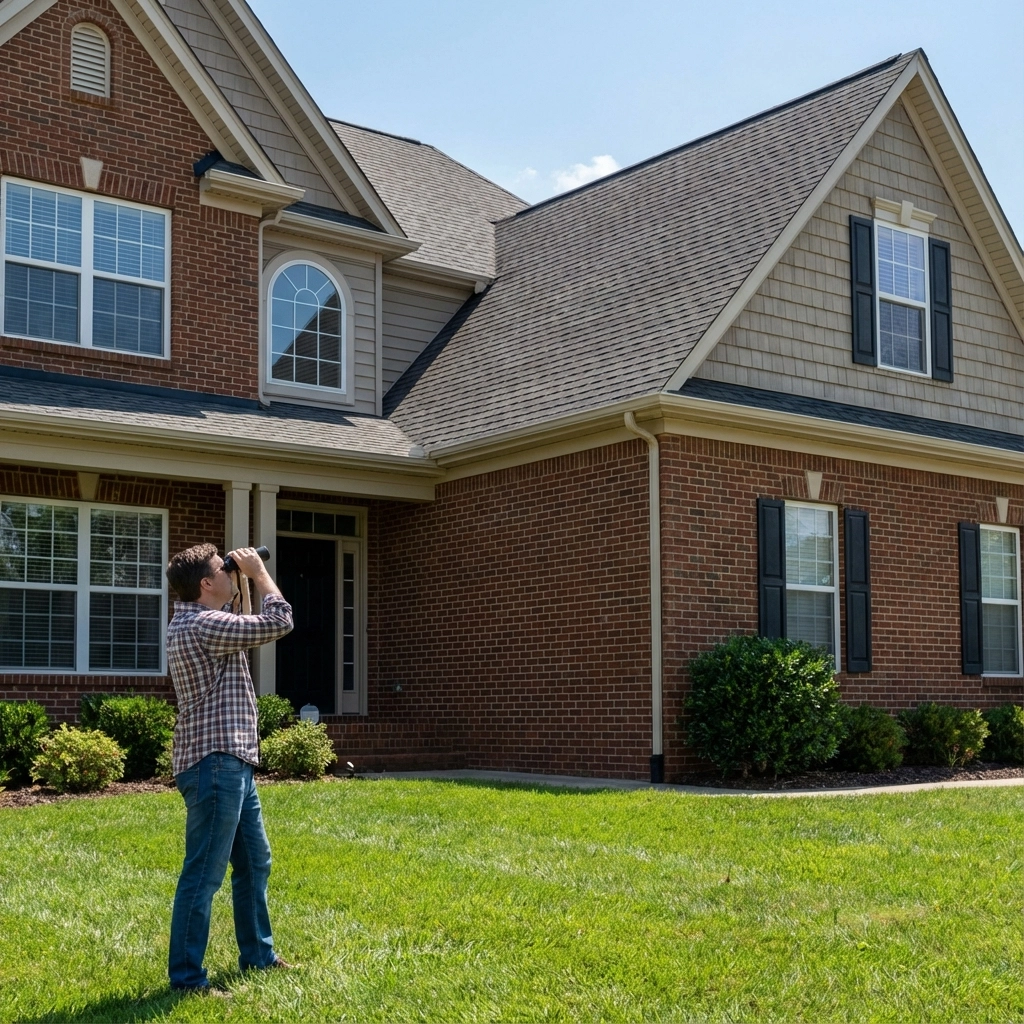
Check for debris buildup, especially after storms. Branches, leaves, and other debris can trap moisture and cause problems if left on your roof for extended periods.
Look for any dark streaks or staining on your roof surface. In our humid Charlotte climate, these often indicate algae or moss growth, which can gradually damage your shingles if not addressed.
Finally, examine your gutters from ground level. Are they pulling away from the house? Do you see any obvious damage or areas where they're not properly attached?
Once you've completed your ground-level assessment, it's time to look more closely at your shingles. If you're comfortable using a ladder, you can get a closer view. Otherwise, a good pair of binoculars works well for this part of the inspection.
Healthy asphalt shingles should lie flat against your roof deck. They shouldn't be curling, cupping, or lifting at the edges. The color should be relatively uniform across your entire roof, though some slight variation is normal as shingles age.
Look for granule loss, which appears as bare or thin spots on your shingles. Some granule loss is normal as shingles age, but excessive loss can indicate that your shingles are nearing the end of their useful life.
Check for cracked or broken shingles. Small cracks might not seem like a big deal, but they allow water to penetrate beneath your shingles, where it can cause rot and other damage.
Pay special attention to the edges of your roof and areas around chimneys, vents, and other roof penetrations. These areas see more stress and are more likely to develop problems first.
Missing shingles are obviously a problem, but don't overlook loose shingles that might blow off in the next storm. If you can see shingle nails that have backed out or if shingles appear to be lifting, those need attention soon.
Flashing might be the most important part of your roof that most homeowners never think about. It's the metal or rubber material that seals the joints where your roof meets chimneys, vents, dormers, and other structures.
When flashing fails, water gets in. And when water gets in, expensive damage follows quickly.
Check all the flashing around your chimney first. Look for gaps between the flashing and the chimney, loose or bent flashing, or areas where the sealant appears cracked or missing.
Examine the step flashing along dormers and roof-to-wall intersections. This flashing should be woven between your shingles and should lie flat against both the roof and the wall.
Don't forget about the flashing around plumbing vents. These rubber boots can crack and deteriorate over time, especially in our hot Carolina summers. Look for cracks, tears, or areas where the rubber has pulled away from the vent pipe.
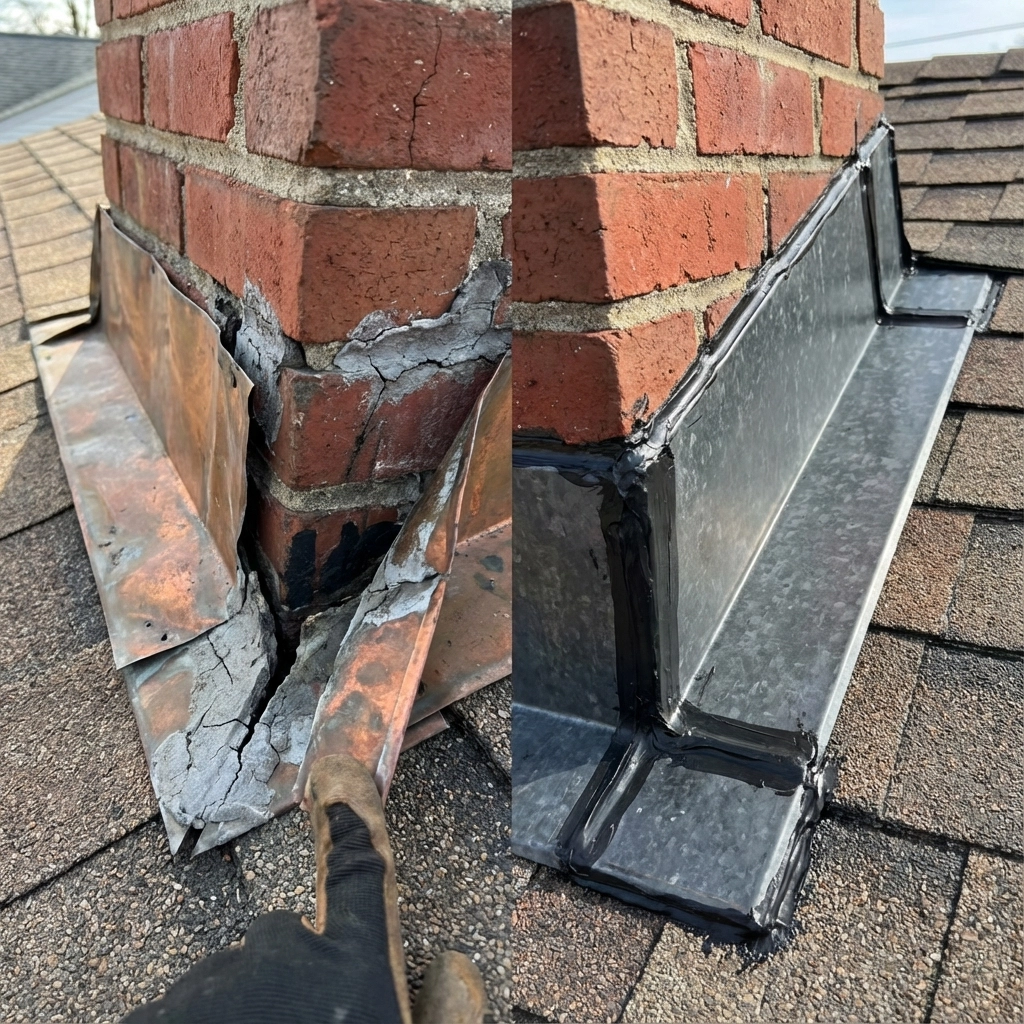
Skylight flashing deserves special attention. Check all four sides of each skylight, looking for gaps, loose caulk, or areas where water might be able to penetrate.
Valley flashing, where two roof sections meet, channels a lot of water during storms. Make sure it's secure and free of debris. Any dents, holes, or loose sections need professional repair.
Your gutters and downspouts play a crucial role in protecting your roof and your home's foundation. But they're also great indicators of your roof's overall health.
Start by looking for shingle granules in your gutters. A small amount is normal, but excessive granules can indicate that your shingles are wearing out faster than they should.
Check for proper drainage by running water from a garden hose into your gutters. Water should flow smoothly toward downspouts without pooling or backing up.
Look for rust, holes, or sagging sections in your gutters. Gutters that pull away from your house can't do their job properly and may cause water to back up onto your roof.
Make sure all downspouts are firmly attached and direct water at least six feet away from your home's foundation. Loose or damaged downspouts can cause water problems both above and below ground.
Clean gutters work better and last longer. If you're comfortable doing it safely, remove debris from your gutters at least twice a year – more if you have trees near your roof.
Your attic provides some of the most important clues about your roof's condition. Problems often show up inside before they're visible from outside.
Start by looking for any signs of water infiltration. Brown or yellow stains on your attic ceiling or walls indicate active or previous leaks. Even old stains deserve attention because they show where problems might develop again.
Check for daylight coming through your roof. If you can see sunlight through cracks or holes, water can definitely get in during storms.
Look for mold or mildew growth, which indicates moisture problems. Our humid Charlotte climate makes mold growth a particular concern when moisture gets trapped in your attic space.
Examine your roof decking from inside. The wood should appear dry and structurally sound. Any sagging, soft spots, or visible rot needs immediate professional attention.
Check your attic insulation too. Wet or compressed insulation doesn't work properly and may indicate ongoing moisture problems.
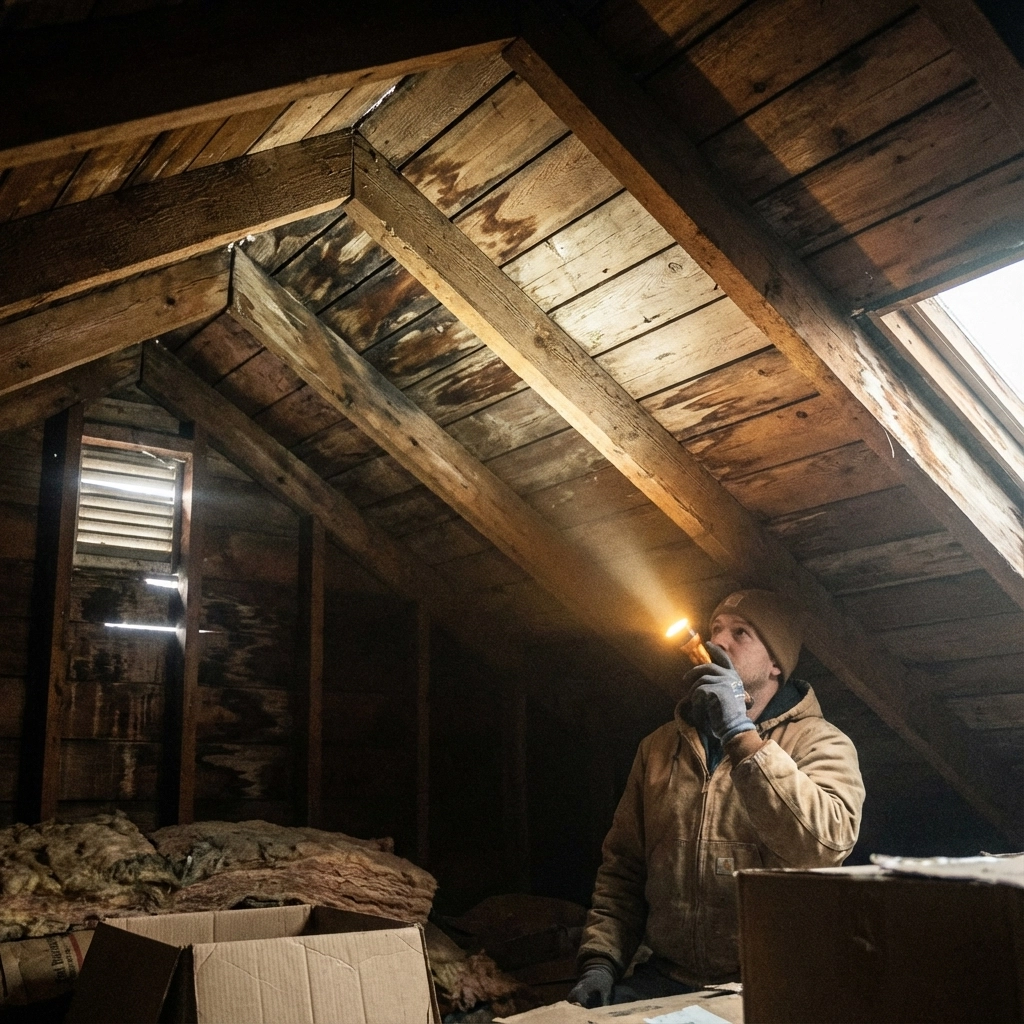
Don't forget about ventilation. Your attic should have both intake vents (usually in the soffits) and exhaust vents (at or near the ridge). Proper ventilation helps prevent ice dams in winter and reduces cooling costs in summer.
Different seasons bring different challenges to Charlotte-area roofs. Timing your inspections strategically helps you catch problems when they're most likely to develop.
Spring inspections should focus on winter damage. Look for loose or missing shingles from winter storms, ice dam damage, and any flashing that may have shifted during freeze-thaw cycles.
Summer inspections are perfect for checking ventilation and looking for signs of algae or moss growth. Our humid summers create ideal conditions for these problems.
Fall inspections should prepare your roof for winter. Clean gutters, check for loose shingles that might not survive winter storms, and make sure all flashing is secure.
After any major storm, do a quick visual inspection for obvious damage. Don't wait for your regular seasonal inspection if you've had hail, high winds, or falling trees.
Modern technology can make your DIY inspections more thorough and safer. A good pair of binoculars lets you examine your roof closely without climbing up for a closer look.
Smartphone cameras with zoom capabilities can document problems for later reference or to show roofing contractors. Take photos of any areas that concern you.
Thermal imaging apps can sometimes detect insulation problems or moisture issues that aren't visible to the naked eye, though professional thermal imaging equipment is more reliable.
Moisture meters can help you check for hidden moisture in your attic or around areas where you suspect leaks.
Not every imperfection means you need immediate roof replacement. Understanding what's normal wear versus what requires attention helps you make better decisions.
Some granule loss on older shingles is normal. But if you're seeing bare spots or significant granule accumulation in gutters, your shingles may need replacement soon.
Small cracks in sealants around flashing aren't unusual after a few years, but large gaps or completely failed sealant needs prompt attention.
Minor algae growth on north-facing roof sections is common in our humid climate. But extensive algae or moss coverage can damage shingles over time.
A few loose shingles after a major storm might be repairable. But if you're seeing widespread shingle damage, you may need more extensive repairs or replacement.
Good record-keeping helps you spot trends and provides valuable information for roofing contractors when you do need professional help.
Take photos during each inspection, focusing on the same areas each time. This creates a visual timeline that shows how your roof changes over time.
Keep notes about what you find, when you find it, and any weather events that might have caused damage.
Save receipts and documentation for any roof repairs or maintenance. This information is valuable for warranty purposes and helps contractors understand your roof's repair history.
Some problems require immediate professional attention. Don't wait if you see any of these warning signs:
Active leaks or water damage inside your home need immediate attention to prevent further damage.
Structural sagging or uneven rooflines can indicate serious problems that may affect your home's safety.
Extensive storm damage, especially after hail storms, should be evaluated by professionals who can assess the full scope of damage.
Missing or severely damaged flashing around chimneys or other penetrations can lead to serious water damage quickly.
Any problem that makes you uncomfortable or uncertain deserves professional evaluation. It's always better to be safe when it comes to your roof.
When your DIY inspection reveals problems that need professional attention, choosing the right contractor makes all the difference.
Look for local contractors who understand Charlotte-area weather challenges. We know how our storms behave and what types of damage they typically cause.
Get multiple quotes, but don't automatically choose the lowest bid. Quality materials and workmanship cost more upfront but save money in the long run.
Ask for references and check them. A reputable contractor should be happy to provide references from recent local projects.
Make sure any contractor you hire is licensed, insured, and bonded. This protects you if something goes wrong during the repair process.
While DIY inspections are valuable, they shouldn't replace professional inspections entirely. Professional roofers see things that homeowners might miss and have experience identifying problems in their early stages.
Consider scheduling a professional inspection every 3-5 years, or after any major storm event. This gives you the peace of mind that comes with expert evaluation.
Professional inspections often identify problems that aren't visible from ground level or that require experience to recognize. This can actually save you money by catching problems before they become expensive repairs.
Regular maintenance based on your inspection findings can significantly extend your roof's useful life.
Keep gutters clean and properly aligned. Clogged gutters can cause water to back up under your shingles, leading to leaks and rot.
Trim tree branches that hang over your roof. Overhanging branches can damage shingles during storms and provide pathways for moisture and pests.
Replace worn weatherstripping and caulk around roof penetrations before they fail completely.
Address small problems before they become big ones. A few loose shingles are much cheaper to fix than the water damage they can cause if left alone.
Eventually, every roof needs replacement. Your regular inspections help you plan for this major investment.
Most asphalt shingle roofs in our area last 20-25 years with proper maintenance. If your roof is approaching this age and you're finding multiple problems during inspections, it might be time to start planning for replacement.
Budget for roof replacement over time rather than being surprised by a sudden failure. Your inspection records help you estimate when replacement might be needed.
Consider upgrading to more durable materials if your current roof has required frequent repairs. While the upfront cost is higher, better materials can provide better long-term value.
Regular DIY roof inspections are one of the best investments you can make in your home's protection and value. They help you catch problems early, plan for future needs, and maintain your roof properly between professional inspections.
But remember that DIY inspections have limitations. Some problems require professional training and experience to identify. When in doubt, don't hesitate to call in the experts.
Your roof protects everything you've worked for. A little time spent inspecting it regularly can save you thousands in unnecessary repairs and give you peace of mind that your home is protected.
At Best Roofing Now, we've helped thousands of Charlotte and Lake Norman area homeowners protect their most important investment. We know the unique challenges our local weather presents, and we're here to help whether you need a second opinion on something you found during your inspection or comprehensive roof replacement.
Ready to put this checklist to work? Start with a ground-level inspection this weekend, and contact us at Best Roofing Now if you find anything that concerns you. Our free inspections provide the professional expertise you need to make informed decisions about your roof's health and your family's protection.
Best Roofing Now
Charlotte's trusted roofing experts since 2019
Based on this article, you may be interested in these services.
We proudly serve these Charlotte-area communities with professional roofing services.
View All Service Areas →Get a free roof inspection and honest assessment from Charlotte's most trusted roofing company.