Roofing Tips & Guides
Expert Roofing Advice for Charlotte Homeowners
Learn from Charlotte's trusted roofing experts. Tips on maintenance, repair, replacement, and protecting your home from the elements.
Learn from Charlotte's trusted roofing experts. Tips on maintenance, repair, replacement, and protecting your home from the elements.

I've seen it countless times here in Charlotte and Lake Norman. A homeowner calls us in a panic because water is pouring into their basement, their siding is rotting, or their roof is showing signs of serious damage.
The culprit? Gutters that were installed wrong from day one.
Here's the thing about gutters – they're not just metal channels stuck to your roof. They're your home's first line of defense against water damage. When they're installed correctly, they quietly protect your biggest investment for decades. When they're done wrong, they can literally destroy your house.
After installing and repairing gutters across Concord, Mooresville, and the greater Charlotte area for years, I've seen every mistake in the book. Today, I'm sharing the most common gutter installation mistakes that can wreck your roof – and exactly how to avoid them.
The biggest mistake I see? Gutters installed without proper pitch.
Your gutters should never be level. They need a slight slope – about 1/4 inch for every 10 feet – to move water toward the downspouts. Sounds simple, right? You'd be amazed how many contractors get this wrong.
When the pitch is too shallow, water sits in your gutters like a stagnant pond. This creates a breeding ground for mosquitoes, causes clogs, and makes your gutters sag under the weight. The standing water also freezes during our occasional Charlotte ice storms, which can crack your gutters completely.
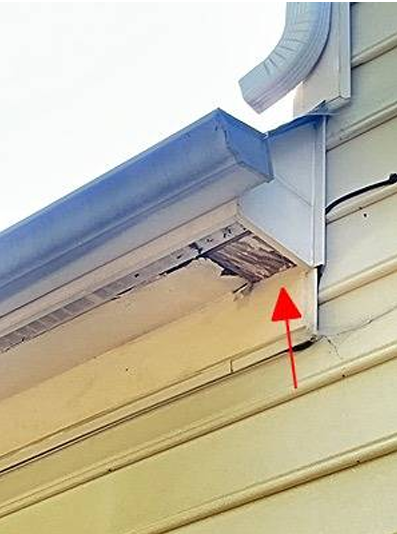
But here's where it gets dangerous for your roof: when gutters tilt forward (which happens when they're not properly pitched), water actually flows backward under your roof edge. I've pulled off countless fascia boards that were completely rotted from this exact problem.
On the flip side, if the pitch is too steep, water rushes through so fast it overshoots the downspouts during heavy rain. We get some serious thunderstorms here in North Carolina, and your gutters need to handle that volume.
How to avoid it: Work with experienced Concord roofing professionals who understand the technical requirements. If you're doing it yourself, use a string line and level to ensure consistent slope. Remember, every 10 feet of gutter needs that 1/4 inch drop toward the downspout.
I can't tell you how many homes I've visited where the gutters were hung in completely the wrong spot.
Gutters that sit too high let rainwater shoot right past them and hit your foundation. Gutters that hang too low catch some water but miss the rest. Either way, you're looking at water damage that could have been completely prevented.
The worst case I ever saw was in a Lake Norman neighborhood where the contractor hung 6-inch gutters a full 4 inches below the roof edge. During our spring storms, water was cascading behind the gutters and soaking the entire wall system. The homeowner ended up needing new siding, insulation, and drywall repair.
Gutters should be positioned so the front edge sits just below the roof line, with the back edge tucked up under the first row of shingles. This captures every drop of water coming off your roof without interfering with proper roof ventilation.
How to avoid it: Make sure your installer understands your specific roof design. Different roof pitches and overhang styles require different positioning strategies. And please, don't let anyone install gutters without first examining how water actually flows off your particular roof.
"Can't we just use whatever gutters are cheapest?"
I hear this question a lot, especially from property managers trying to save money. But using the wrong gutter size is like putting a garden hose on a fire hydrant – it's going to end badly.
Most Charlotte-area homes need 5-inch K-style gutters. But homes with steep roofs, large roof areas, or multiple stories often need 6-inch gutters to handle the water volume. The steeper your roof pitch, the faster water runs off, and the larger your gutters need to be to catch it all.
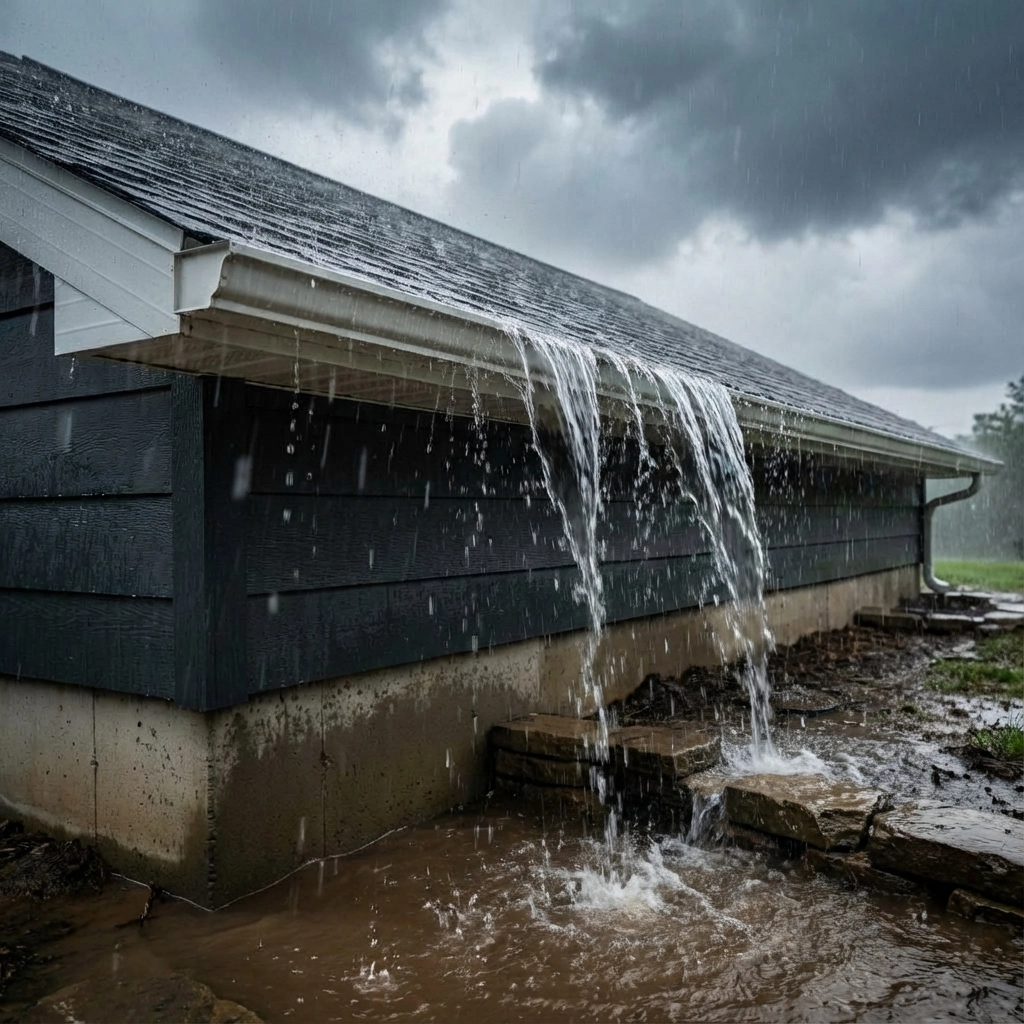
I learned this lesson early in my career when I installed standard 4-inch gutters on a two-story home in Mooresville. Everything looked fine until our first heavy rainstorm. Water poured over those gutters like Niagara Falls, flooding the homeowner's flower beds and creating erosion problems around the foundation.
How to avoid it: Calculate your roof's square footage and factor in your roof pitch. As a general rule, 5-inch gutters handle most single-story homes, while two-story homes or homes with steep pitches need 6-inch systems. When in doubt, go bigger – it's much cheaper than fixing water damage later.
This might sound technical, but bear with me – it's important.
Gutters are held up by hangers (the brackets that attach to your fascia board). When these hangers are spaced too far apart, your gutters start to sag. Sagging gutters don't just look bad – they completely disrupt water flow and create low spots where debris collects.
I've seen gutters with hangers spaced 4 feet apart that were literally falling off the house. In our area, with our heavy spring rains and occasional ice loads, gutters need solid support every 16-24 inches maximum.
But here's what really damages your roof: when gutters sag, they pull away from the fascia board. This creates gaps where water can get behind your gutter system and soak into your roof structure. I've replaced entire fascia board systems because of this problem.

How to avoid it: Insist on proper hanger spacing during installation. Hidden hanger systems (like the ones we use) provide better support than spike-and-ferrule systems. And make sure your installer uses hangers rated for your gutter material and local weather conditions.
Not enough downspouts might be the most expensive mistake on this list.
I see homes all the time with 40 feet of gutters and just one downspout. During a heavy storm, that single downspout can't handle the volume, so water overflows the entire gutter system. All that overflow ends up against your foundation, in your basement, or washing away your landscaping.
The general rule is one downspout for every 20-30 feet of gutter, but that can vary based on your roof size and local rainfall patterns. Here in the Charlotte area, where we can get 2-3 inches of rain in an hour during summer storms, I often recommend extra downspouts for added protection.
But placement matters just as much as quantity. I've seen downspouts positioned right at corners where they dump water directly onto sidewalks or patios. That water needs to be directed at least 4-6 feet away from your foundation to do its job.
How to avoid it: Count your linear feet of gutters and divide by 25 – that's your minimum number of downspouts. Position them at natural break points and make sure each one has proper extensions or splash blocks to direct water away from your home.
This is where the "handyman special" gutter installations really fall apart.
Proper gutter installation requires high-quality sealants at every joint and connection point. I've seen installations where contractors used generic caulk from the hardware store instead of proper gutter sealant. Six months later, every joint was leaking.
Loose or inadequate fastening is just as bad. Gutters experience constant expansion and contraction with temperature changes. They also have to handle wind loads and the weight of water and debris. If they're not properly fastened, they'll work loose and fail.
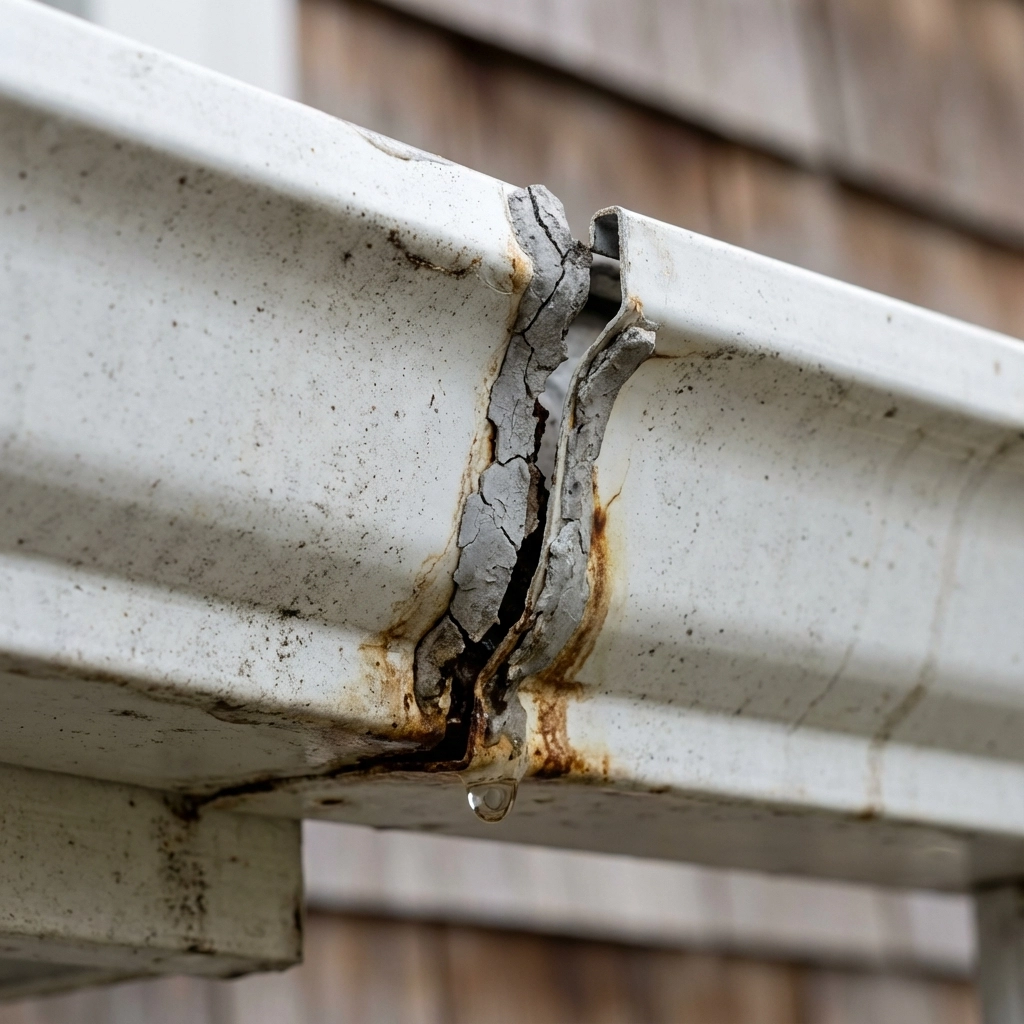
The worst part? These failures often start small. A tiny leak at a joint becomes a steady drip that rots your fascia board. A loose bracket becomes a sagging section that disrupts your entire drainage system.
How to avoid it: Use quality materials designed specifically for gutter systems. All joints should be sealed with proper gutter sealant, and all hangers should be fastened into solid wood with appropriate screws or bolts. Don't skip these details to save a few dollars.
Living in Charlotte and Lake Norman means dealing with some unique weather challenges that affect gutter performance.
Our summer thunderstorms can dump incredible amounts of water in very short periods. Your gutter system needs to handle 3-4 inches per hour without overflowing. Our occasional ice storms put extra weight stress on gutters and can crack poorly installed systems.
And let's talk about our trees. We have beautiful mature oaks and maples throughout the area, but they drop a lot of leaves and debris. Gutters that aren't properly designed and installed become clogged nightmares that require constant maintenance.
This is why cookie-cutter gutter installations don't work here. Your system needs to be designed for our specific climate, your specific roof, and your specific property challenges.
The best way to avoid all these problems? Work with experienced local professionals who understand both proper installation techniques and our area's specific challenges.
At Best Roofing Now, we've been protecting Charlotte and Lake Norman homes for years. We understand how water behaves on different roof styles, what materials work best in our climate, and how to design systems that handle everything from spring storms to ice loads.
But if you're determined to tackle gutter installation yourself, here are the non-negotiables:
Here's the bottom line: your gutters are part of your roof system. When they fail, your roof fails. When they're installed correctly, they protect your entire home for decades.
If you're seeing signs of gutter problems – overflowing, sagging, leaks, or water damage around your foundation – don't wait. Small problems become expensive disasters faster than you think.
We're always happy to take a look and give you an honest assessment of your current system. Sometimes a simple repair can solve the problem. Sometimes you need a complete replacement. Either way, you deserve to know exactly what's going on with your home's protection system.
Ready to protect your Charlotte or Lake Norman home with properly installed gutters? Contact Best Roofing Now today for a free inspection and consultation. We'll assess your current gutter system, explain any problems we find, and give you straight answers about your options. Call us now or visit our website to schedule your appointment.
Your roof – and your foundation – will thank you.
Best Roofing Now
Charlotte's trusted roofing experts since 2019
Based on this article, you may be interested in these services.
We proudly serve these Charlotte-area communities with professional roofing services.
View All Service Areas →Get a free roof inspection and honest assessment from Charlotte's most trusted roofing company.