
Roofing Tips & Guides
Expert Roofing Advice for Charlotte Homeowners
Learn from Charlotte's trusted roofing experts. Tips on maintenance, repair, replacement, and protecting your home from the elements.
Learn from Charlotte's trusted roofing experts. Tips on maintenance, repair, replacement, and protecting your home from the elements.

As we head into 2025, Charlotte homeowners are making resolutions to improve their properties and protect their investments. But before you tackle that roof project you’ve been putting off, let’s talk about the costly mistakes that turn dream renovations into financial nightmares.
Over the past decade serving the Charlotte and Lake Norman areas, we’ve seen the same expensive errors repeated again and again. These aren’t small oversights, they’re major missteps that can cost homeowners $5,000 to $15,000 in repairs, sometimes within just a few years of installation.
The good news? Every single one of these mistakes is completely preventable when you know what to watch for.
Charlotte’s unique climate creates specific challenges for roof installations. Our hot, humid summers followed by unpredictable winter storms put extra stress on roofing systems. What might pass for “good enough” in Arizona or Colorado will fail quickly here in the Carolinas.
Our annual rainfall of 43 inches, combined with sudden temperature swings and occasional ice storms, means your roof faces constant expansion, contraction, and water penetration attempts. That’s why proper installation techniques aren’t just recommendations, they’re essential for long-term performance.
Here’s a startling fact: 95% of roof leaks that professionals repair stem from poorly installed flashing. Not old shingles, not storm damage, flashing failures.
Flashing is the thin metal barrier (usually aluminum or galvanized steel) that protects vulnerable areas where your roof meets walls, chimneys, vents, and skylights. Think of it as weatherstripping for your roof’s most exposed joints.
Using cheap, thin metal that rusts within two years. Budget contractors often use builder’s grade flashing that’s 1/3 the thickness of quality materials. In Charlotte’s humid climate, this stuff starts failing almost immediately.
Skipping step flashing around chimneys. Step flashing involves installing individual pieces that overlap like fish scales. Lazy installers use one continuous piece instead, creating weak points where water can penetrate.
Relying on roofing cement as the primary seal. Caulk and roofing cement are temporary fixes, not permanent solutions. They crack and shrink within months, especially during our hot summers.
Improper valley installation. Charlotte gets heavy downpours that turn roof valleys into rushing rivers. Without proper metal valley flashing, water overwhelms shingle valleys and finds its way inside.
Quality flashing installation adds maybe $200-300 to your total project cost but prevents thousands in water damage. Look for contractors who use aluminum or copper flashing, install proper step flashing, and include ice-and-water shield in vulnerable areas.
And here’s something most homeowners don’t know: manufacturers void shingle warranties if proper flashing isn’t installed. That “lifetime” warranty becomes worthless with poor flashing work.
This might sound minor, but incorrect nail placement is one of the fastest ways to void your roof warranty and create leak points.
Shingle manufacturers are very specific about fastening requirements. Most asphalt shingles need exactly five nails (sometimes six on steep roofs), placed through the nailing strip, never into the self-sealing adhesive area below.
Nails driven too high miss the nailing strip and penetrate only the upper shingle. This creates a weak attachment that fails in high winds.
Nails driven too low go through the self-sealing strip, creating permanent holes that never seal properly. Charlotte’s thermal cycling (hot days, cool nights) makes these holes expand over time.
Overdriven nails break through the shingle surface, creating immediate leak points. Underdriven nails create raised spots that prevent proper sealing.
Wrong nail type is especially critical for metal roofing. Using standard roofing nails instead of specialized metal roofing fasteners leads to loose panels, rust stains, and structural failure.
Our area experiences frequent wind events, not just hurricanes, but sudden thunderstorms with 50+ mph gusts. Improperly fastened shingles become projectiles during these events, leaving your roof deck exposed and creating insurance headaches.
Professional installers use pneumatic nail guns with adjustable pressure settings and check their work constantly. They also space nails correctly (about 6 inches apart) and ensure each nail hits solid roof decking.
Charlotte’s hot, humid climate makes proper roof ventilation absolutely critical. Without it, your attic becomes a swamp that kills your roof from both above and below.
Many installations skip proper ventilation because it’s “invisible” work that doesn’t show immediate results. But inadequate ventilation creates multiple expensive problems:
Premature shingle aging. Superheated attics (140°F+ in Charlotte summers) cook shingles from below while the sun attacks from above. This double assault can cut shingle life in half.
Ice dam formation. Even in Charlotte, we get occasional ice storms. Poor ventilation creates warm spots that melt snow unevenly, leading to ice dams and leak damage.
Moisture buildup. Without proper air circulation, humidity condenses in your attic, leading to mold growth, rotted decking, and insulation damage.
Energy waste. Poor ventilation forces your HVAC system to work overtime, increasing cooling costs by 10-15% during our long summers.
Charlotte receives about 43 inches of rain annually, often in heavy downpours. Proper drainage isn’t optional, it’s survival.
Common drainage mistakes include:
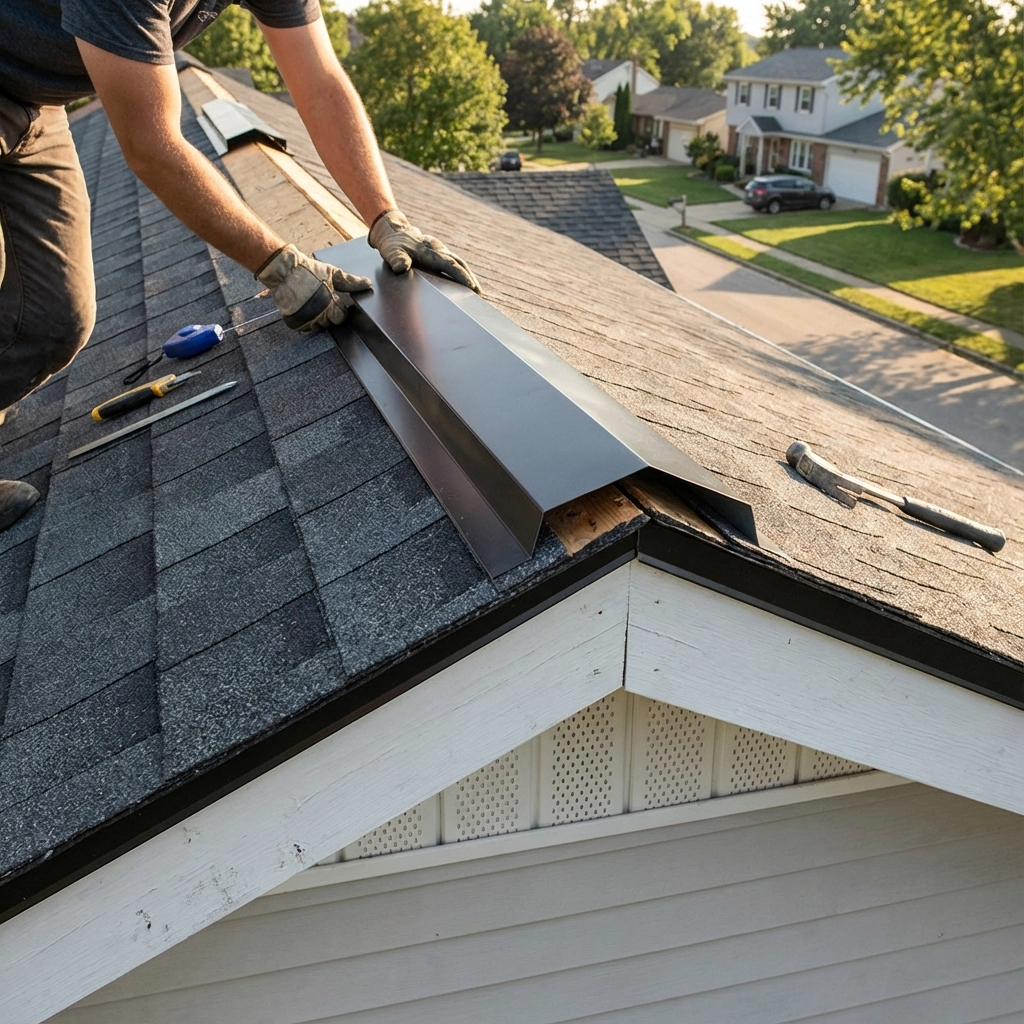
Proper ventilation requires intake vents (usually soffit vents) and exhaust vents (ridge vents or turbine vents) to create consistent airflow. The general rule is 1 square foot of ventilation per 300 square feet of attic space, split evenly between intake and exhaust.
For drainage, gutters need at least 1/4 inch of slope per 10 feet, and downspouts should be sized appropriately for roof area. Most Charlotte homes need 6-inch gutters, not the standard 5-inch size.
This is the mistake that seems smart upfront but creates expensive problems later. Installing new shingles over existing ones (called an “overlay” or “recover”) saves money initially but almost always fails within 2-3 years.
Hidden damage stays hidden. When contractors don’t remove old shingles, they can’t inspect the roof deck underneath. Rotted plywood, damaged flashing, and structural issues remain unaddressed.
Trapped moisture. Old shingles often have small holes, cracks, and worn spots. New shingles trap moisture against these damaged areas, creating perfect conditions for rot and mold.
Uneven surface. New shingles can’t lay flat over old, curled shingles. This creates weak spots and accelerated wear patterns.
Weight overload. Two layers of shingles can exceed your roof’s design load, especially when wet. This is particularly concerning for older homes in established Charlotte neighborhoods.
Code violations. Most building codes (including Charlotte’s) prohibit more than two layers of shingles. If your home already has two layers, an overlay becomes illegal.
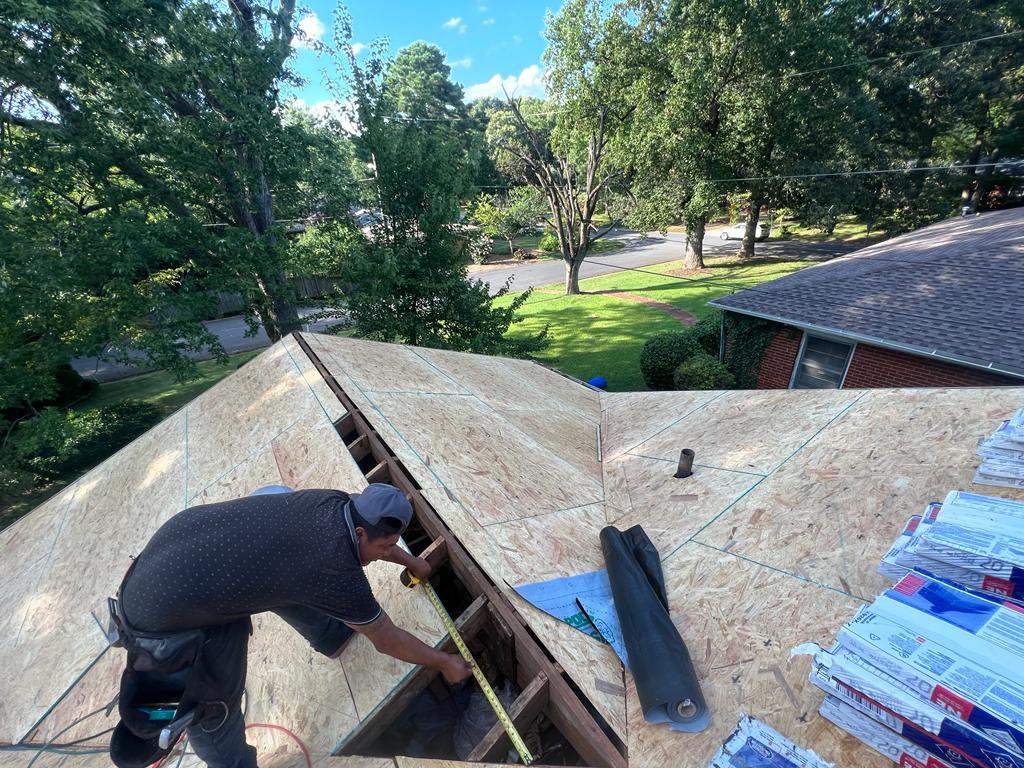
Yes, complete tear-offs cost more initially: usually $2,000-4,000 more than overlays. But here’s what that money buys:
Overlays typically fail within 2-3 years, requiring complete tear-off anyway. You end up paying for the overlay plus a full replacement, often totaling more than doing it right the first time.
This is where inexperienced contractors really show their colors. When old shingles come off, the real condition of your roof becomes visible. What contractors find often surprises homeowners:
Unscrupulous contractors sometimes discover these issues and simply shingle over them to avoid difficult conversations about additional costs. This is like putting new carpet over rotten floorboards: it looks good temporarily but creates dangerous long-term problems.
Why structural integrity matters: Your new roof is only as strong as what supports it. Beautiful shingles over compromised decking will sag, leak, and potentially collapse under heavy loads (like ice accumulation or maintenance workers).
Our area’s clay soil causes foundation settling that can stress roof structures over time. Additionally, many older Charlotte homes were built when codes were less stringent. Modern roofing materials often require additional support.
We frequently find homes that need:
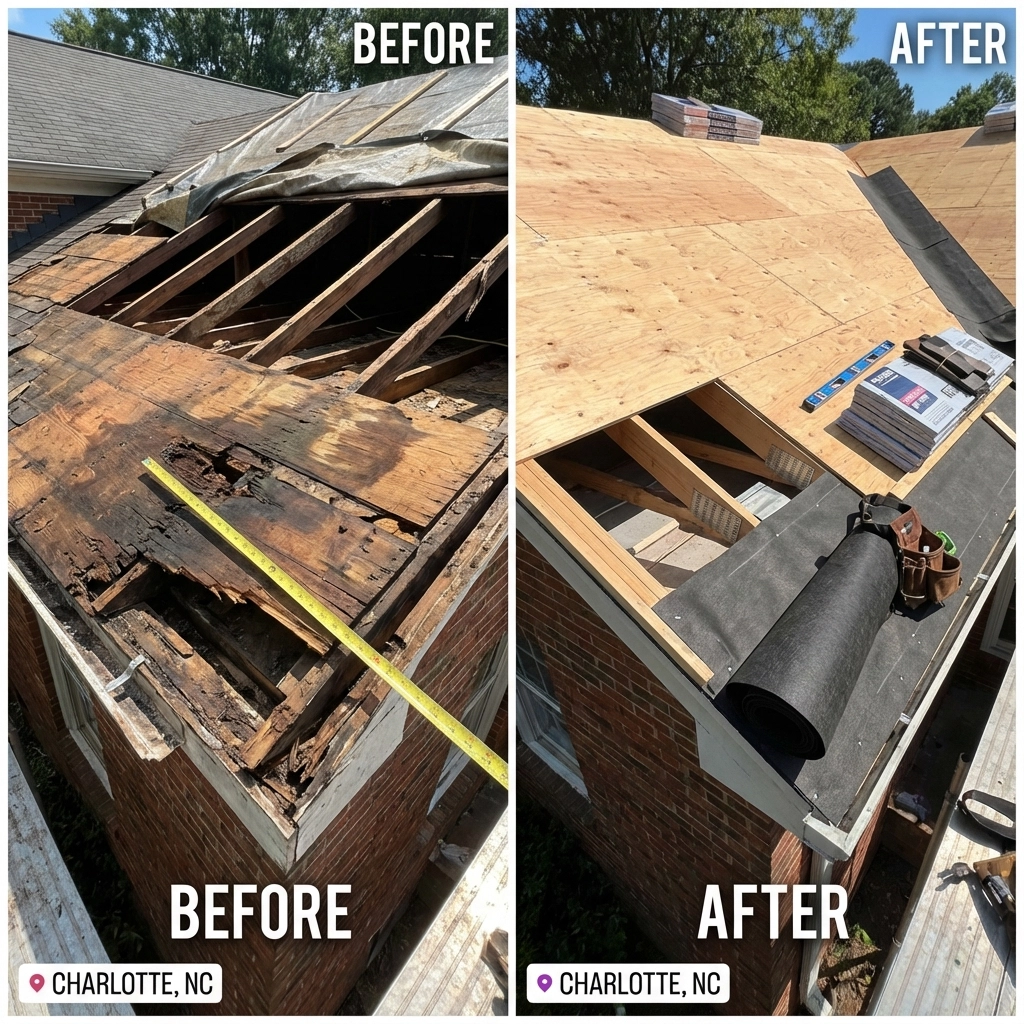
Addressing structural issues adds upfront cost but prevents catastrophic failure later. More importantly, it’s usually required by building codes and necessary for insurance validity.
Think of it this way: if you discovered termite damage during a kitchen renovation, would you install new cabinets over rotted floor joists? Of course not. The same logic applies to roofing.
Here’s the meta-mistake that enables all the others: selecting contractors based solely on lowest bid. When estimates range from $8,000 to $15,000 for the same project, that lowest bid almost always indicates corner-cutting.
When you hire experienced professionals, you’re not just buying shingles and labor. You’re purchasing:
Proper permitting and inspection. Charlotte requires permits for most roofing work. Legitimate contractors handle this process and ensure work meets current building codes.
Insurance and warranty protection. Licensed contractors carry proper insurance that protects you from liability. They also provide meaningful warranties backed by established businesses.
Quality material sourcing. Professional contractors have relationships with distributors that ensure material authenticity and warranty coverage.
Skilled installation techniques. There’s a huge difference between someone who can nail shingles and a craftsperson who understands building science, weather patterns, and long-term performance.
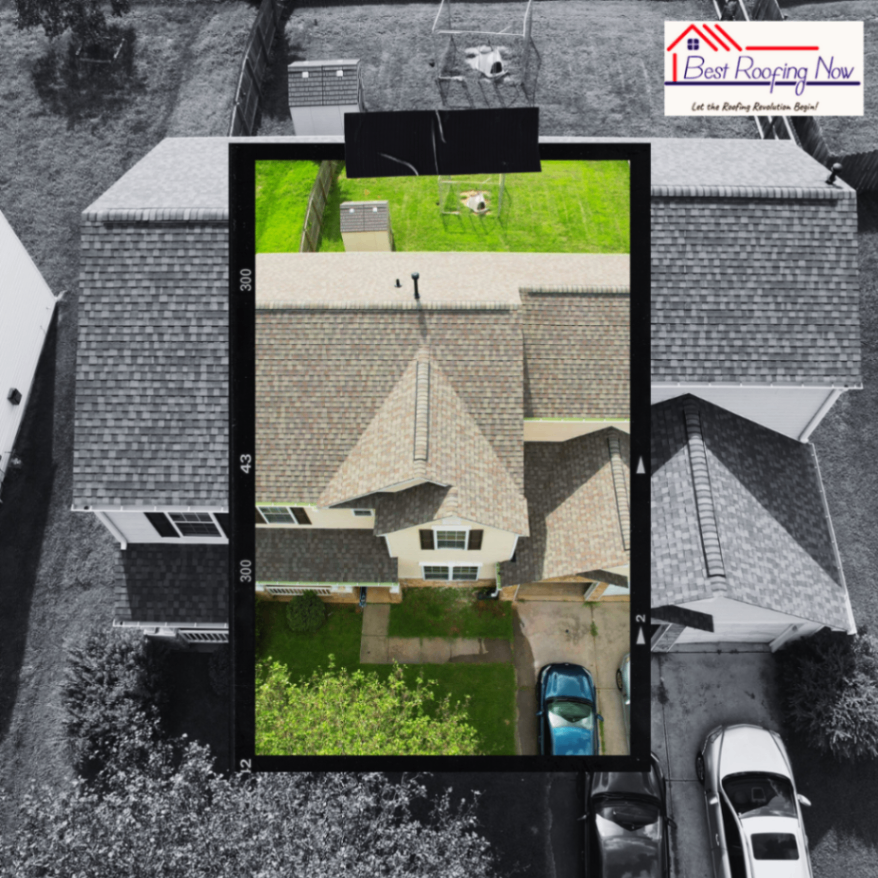
As you plan your 2025 home improvements, here’s how to avoid these costly mistakes:
Quality roof installation isn’t just about avoiding immediate problems: it’s about protecting your investment for decades. In Charlotte’s challenging climate, proper installation techniques can extend roof life from 15-20 years to 25-30 years.
Consider the math: spending an extra $3,000-5,000 for proper installation on a roof that lasts 30 years instead of 15 means you avoid a complete replacement cycle. That’s a return on investment of $15,000-25,000 over the roof’s lifetime.
Don’t let 2025 become the year an avoidable roofing mistake costs you thousands in repairs. Whether you’re planning a replacement this spring or just want to evaluate your current roof’s condition, now is the time to address potential issues.
Schedule a comprehensive roof inspection with Best Roofing Now to identify any existing problems before they become expensive emergencies. Our detailed assessment covers all the critical areas mentioned in this article: flashing, ventilation, structural integrity, and overall installation quality.
Ready to protect your investment? Call us at (980) 332-7325 or visit bestroofingnow.com to schedule your free inspection. Let’s make 2025 the year you gain complete confidence in your roof’s performance and protection.
Best Roofing Now
Charlotte's trusted roofing experts since 2019
Need help with your roof? Explore our professional roofing services in Charlotte NC.
Get a free roof inspection and honest assessment from Charlotte's most trusted roofing company.


